

TL;DR
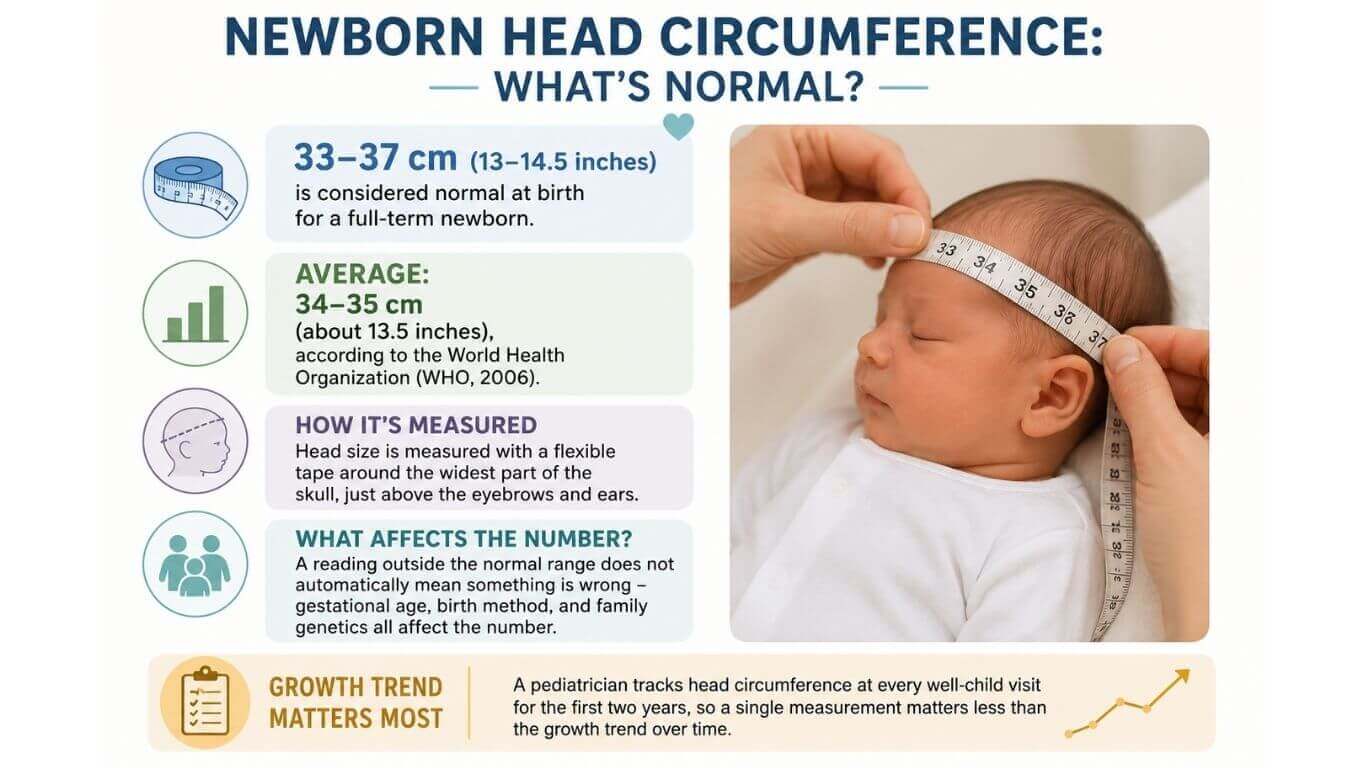
- A normal head circumference at birth is 33-37 cm (13-14.5 inches) for a full-term newborn.
- The average is 34-35 cm (about 13.5 inches), according to the World Health Organization (WHO, 2006).
- Head size is measured with a flexible tape around the widest part of the skull, just above the eyebrows and ears.
- A reading outside the normal range does not automatically mean something is wrong – gestational age, birth method, and family genetics all affect the number.
- A pediatrician tracks head circumference at every well-child visit for the first two years, so a single measurement matters less than the growth trend over time.
What Is Normal Head Circumference at Birth?
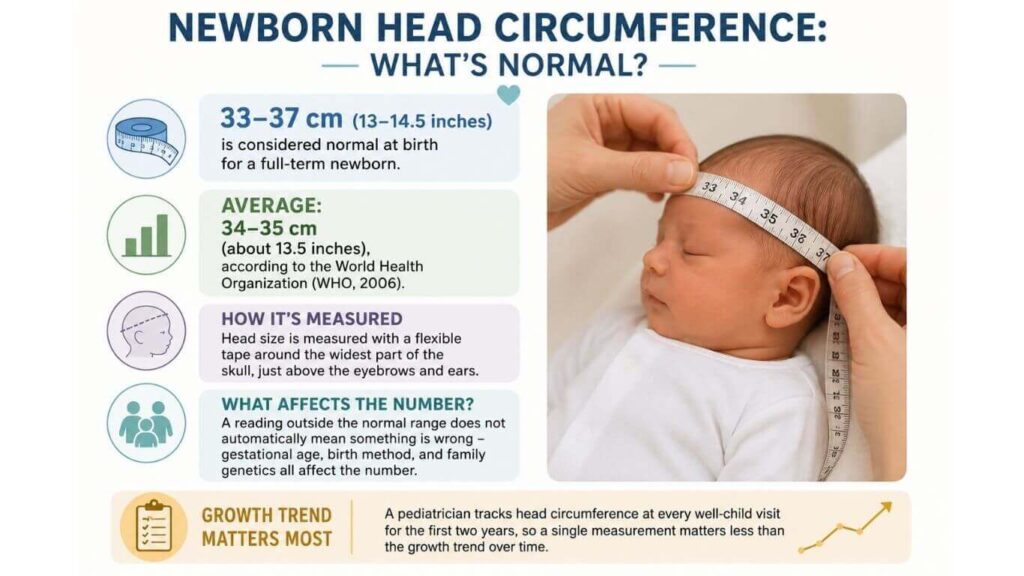
A normal head circumference at birth falls between 33 and 37 cm (13 to 14.5 inches) for a full-term baby born between 37 and 42 weeks of gestation. The WHO Multicentre Growth Reference Study (WHO, 2006) sets the average at 34-35 cm for both boys and girls, with boys averaging slightly larger than girls by about 1 cm.
Head circumference – also called occipitofrontal circumference (OFC) – is one of three standard newborn measurements taken at birth alongside weight and length. It tells doctors whether the brain and skull are growing as expected.
How Head Circumference Is Measured at Birth
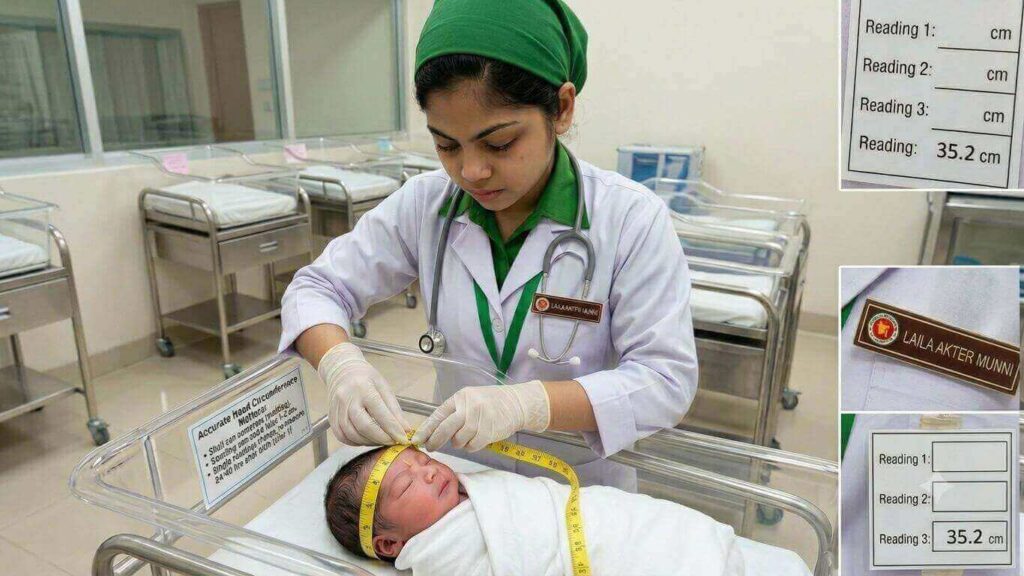
A nurse or midwife measures head circumference using a flexible, non-stretch tape measure. The tape goes around the widest part of the head: just above the eyebrow ridges at the front and over the most prominent point at the back of the skull (the occiput).
The measurement is taken three times and the largest of the three readings is recorded. This matters because:
- The skull can compress during vaginal delivery (called molding), making the head temporarily narrower or longer.
- Scalp swelling from a vacuum-assisted delivery can add a false centimeter or two.
- A single reading taken too soon after birth may not reflect the actual skull size.
Most hospitals re-measure head circumference 24-48 hours after birth once molding and swelling have settled.
Normal Head Circumference Ranges by Gestational Age
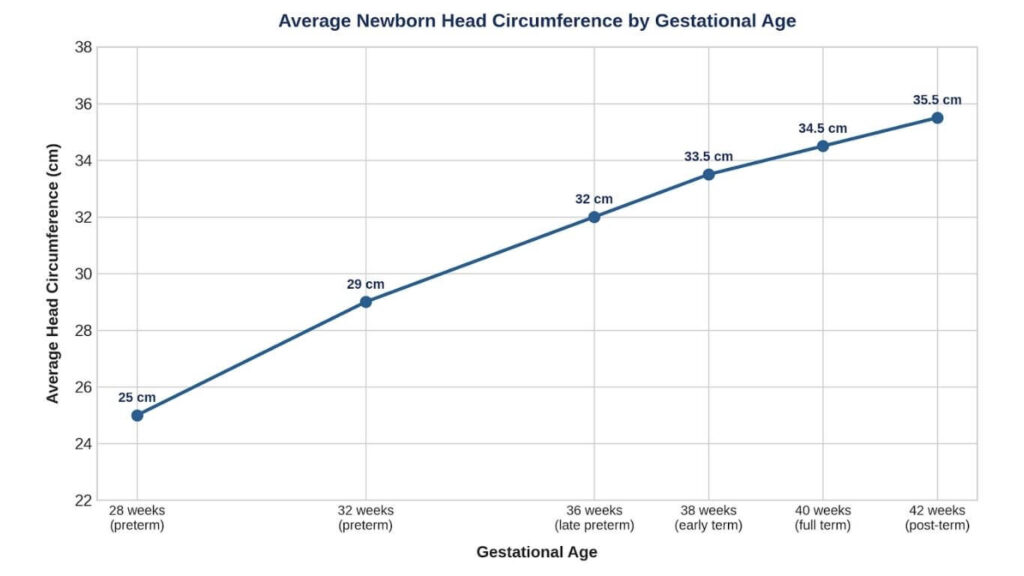
Head size at birth depends heavily on how many weeks the pregnancy lasted. A baby born at 28 weeks will have a much smaller head than one born at 40 weeks – both can be perfectly healthy.
| Gestational Age | Average Head Circumference |
| 28 weeks (preterm) | ~25 cm (9.8 inches) |
| 32 weeks (preterm) | ~29 cm (11.4 inches) |
| 36 weeks (late preterm) | ~32 cm (12.6 inches) |
| 38 weeks (early term) | ~33.5 cm (13.2 inches) |
| 40 weeks (full term) | ~34-35 cm (13.4-13.8 inches) |
| 42 weeks (post-term) | ~35-36 cm (13.8-14.2 inches) |
Sources: Fenton & Kim Preterm Growth Chart (2013); WHO Child Growth Standards (2006)
Doctors plot a baby’s measurement on a “growth percentile chart” – either the WHO chart for full-term infants or the Fenton chart for preterm babies. A head circumference between the 3rd and 97th percentile is considered within the normal range.
What Affects Head Size at Birth
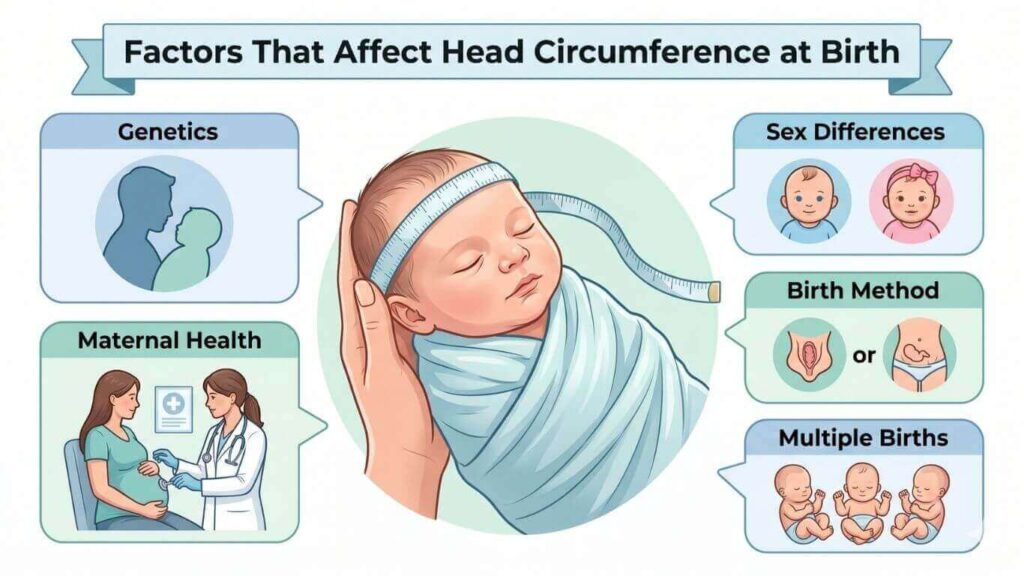
Head circumference at birth is not a fixed target – several factors shift the expected range for any individual baby.
Genetics: Parents with larger or smaller heads tend to have babies with larger or smaller heads. A pediatrician often measures a parent’s head circumference when a newborn reads outside the standard range. This is called familial macrocephaly or familial microcephaly when the pattern runs in the family without any underlying condition.
Sex: Male newborns average about 34.5 cm and female newborns average about 33.9 cm at 40 weeks gestation (WHO, 2006). Growth charts are sex-specific for this reason.
Birth method: Vaginal delivery causes temporary skull molding. Cesarean babies skip this compression, so their heads may measure slightly rounder and larger immediately after birth – though the difference normalizes within a few days.
Multiple births: Twins and triplets are usually smaller at birth, including head size, because of space and nutrient sharing in the womb.
Maternal health: Conditions like gestational diabetes can increase fetal size overall, including head circumference, while growth restriction from placental issues can produce smaller measurements.
What Macrocephaly and Microcephaly Mean
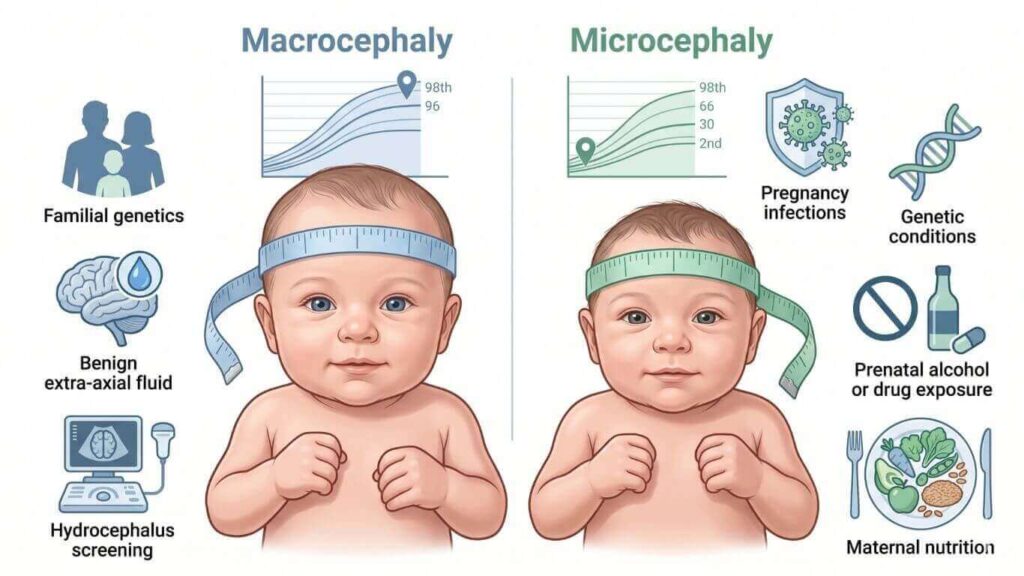
A head circumference above the 98th percentile for age and sex is called **macrocephaly**. Below the 2nd percentile is called **microcephaly**. Both terms describe measurements, not diagnoses.
Macrocephaly at Birth
Most macrocephaly in newborns is benign. The two most common explanations are:
Familial macrocephaly – a large head runs in the family with no neurological impact.
Benign extra-axial collections of infancy – extra fluid around the brain that usually resolves on its own by age 2 (Laubscher et al., Pediatric Neurology, 2019).
Less commonly, macrocephaly can indicate hydrocephalus (fluid buildup inside the brain’s ventricles), which a pediatrician will investigate with an ultrasound if the head is growing faster than expected across multiple measurements.
Microcephaly at Birth
Microcephaly means the brain did not grow as large as expected during pregnancy. Causes include:
– Infections during pregnancy (Zika virus, cytomegalovirus, rubella)
– Genetic conditions (Cornelia de Lange syndrome, trisomy 18)
– Exposure to alcohol or certain drugs in utero
– Severe malnutrition during pregnancy
The CDC defines severe microcephaly as a head circumference more than 3 standard deviations below the mean for gestational age and sex (CDC, 2020). Severe microcephaly is more likely to be associated with developmental effects than mild microcephaly.
How Doctors Track Head Growth After Birth
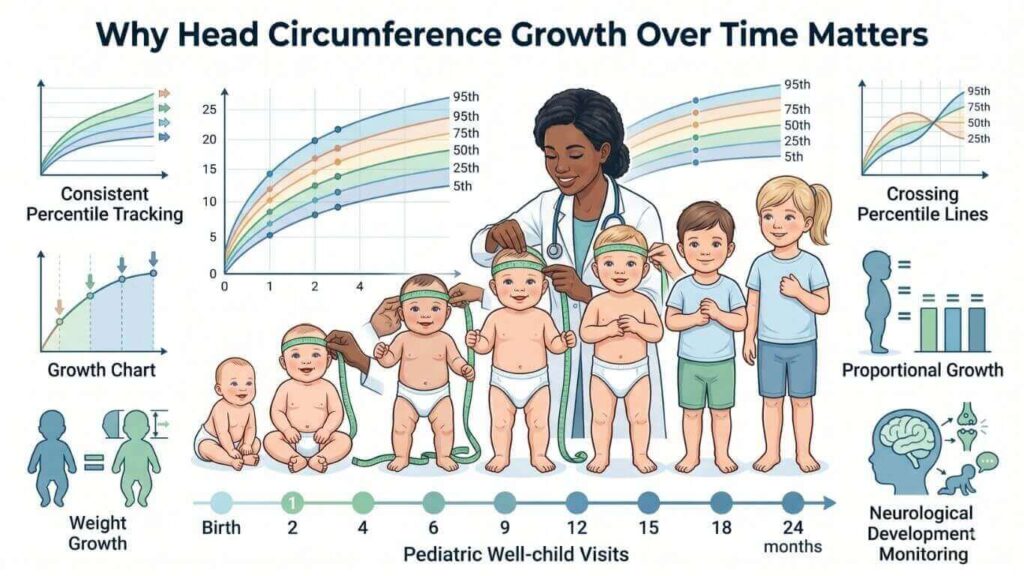
A single head circumference measurement at birth tells only part of the story. The growth rate over time matters more than any one number.
Pediatricians measure head circumference at every well-child visit during the first two years of life – typically at 1, 2, 4, 6, 9, 12, 15, 18, and 24 months. They look for:
Consistent percentile tracking – a baby who stays near the 25th percentile across visits is growing normally, even if the number seems small.
Crossing percentile lines – a baby whose head jumps from the 50th to the 97th percentile between visits needs further evaluation, as does one that drops from the 50th to the 5th.
Proportionality – head size is considered alongside weight and height. A big baby with a proportionally large head is a different picture than a small baby with a disproportionately large head.
The American Academy of Pediatrics (AAP, 2023) recommends head circumference measurement at every preventive care visit through 24 months as a standard screening tool for neurological development.
Common Mistakes Parents Make When Reading Head Circumference Results
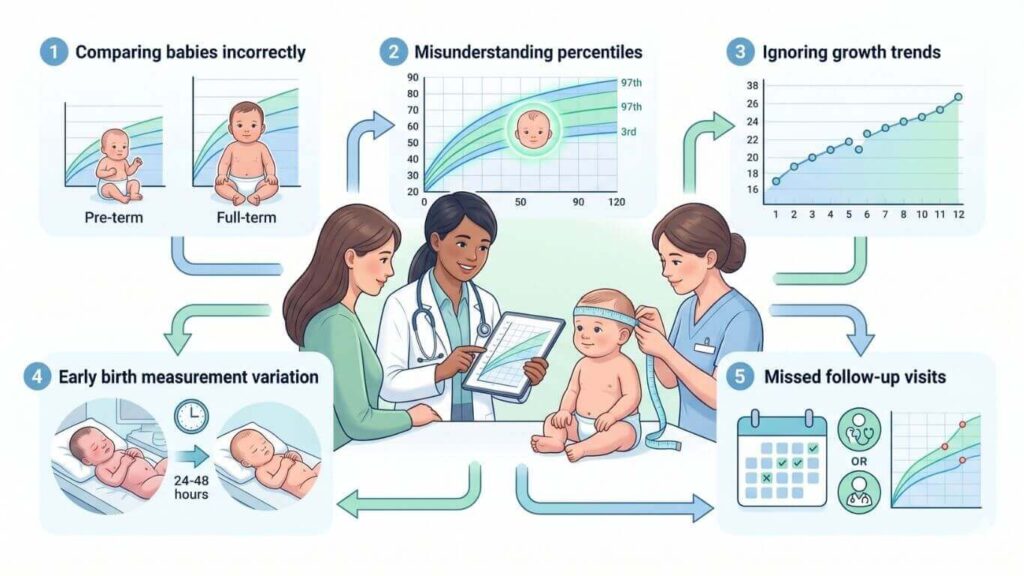
Comparing to another baby’s number. Head circumference only means something on the correct chart for the baby’s sex and gestational age. A 34 cm head at 36 weeks is different from 34 cm at 40 weeks.
Treating the 50th percentile as the only “normal.” Any percentile between the 3rd and 97th is normal. A baby at the 10th percentile is not small-headed; they are in the lower-normal range.
Ignoring the trend. A one-time reading outside the range is far less meaningful than two or three consecutive readings moving in the same direction.
Panicking after a delivery-room measurement. The first measurement, taken within hours of birth, can be off by 1-2 cm due to molding or swelling. The 24-48 hour re-measurement is more reliable.
Skipping follow-up visits. Head growth concerns are only visible across time. Missing well-child checkups means missing the data a pediatrician needs to spot a real problem early.
Frequently Asked Questions About Normal Head Circumference at Birth
What is the normal head circumference at birth?
For a full-term newborn (37-42 weeks gestation), normal head circumference is 33-37 cm (13-14.5 inches). The WHO average is 34-35 cm, with boys slightly larger than girls. Premature babies have smaller heads appropriate to their gestational age.
How is head circumference measured on a newborn?
A nurse places a flexible tape measure around the widest part of the baby’s head – just above the eyebrows at the front and over the most protruding point at the back. The measurement is taken three times and the largest reading is recorded.
What is the difference between macrocephaly and microcephaly?
Macrocephaly means the head circumference is above the 98th percentile for age and sex. Microcephaly means it is below the 2nd percentile. Both are descriptions of size, not automatic diagnoses. Most macrocephaly is familial and harmless; microcephaly requires investigation to find the cause.
Does a larger head at birth mean a smarter baby?
No. Head circumference at birth reflects skull and brain size, not intelligence. Brain structure, connectivity, and development over time are what matter for cognitive outcomes – not the centimeter reading at delivery.
When should I be concerned about my baby’s head circumference?
Talk to a pediatrician if: the birth measurement is below the 2nd or above the 98th percentile; the head grows faster or slower than expected across two or more well-child visits; or the head size is disproportionate to the baby’s overall body size. A single borderline measurement at birth, especially right after vaginal delivery, is rarely cause for alarm on its own.
Is head circumference different for boys and girls at birth?
Yes, slightly. Boys average about 34.5 cm and girls average about 33.9 cm at 40 weeks gestation (WHO, 2006). The difference is small but consistent, which is why growth charts are separated by sex.
How long do doctors measure head circumference?
Most pediatricians measure head circumference at every well-child visit from birth through 24 months. After age 2, the skull has largely reached adult proportions and routine measurement stops unless there is a specific concern.
Key Takeaways
– Normal head circumference at birth is 33-37 cm for a full-term baby, with an average of 34-35 cm per WHO standards.
– The measurement is taken at the widest point of the skull and is re-done 24-48 hours after birth for accuracy, especially after vaginal delivery.
– Gestational age, sex, genetics, and birth method all shift what “normal” looks like for an individual baby.
– Percentile range (3rd-97th) matters more than hitting the 50th percentile.
– Growth trend across multiple visits matters more than any single measurement at birth.