

[Published: June 2026 | Last updated: June 2026] | 8 min read
TL;DR
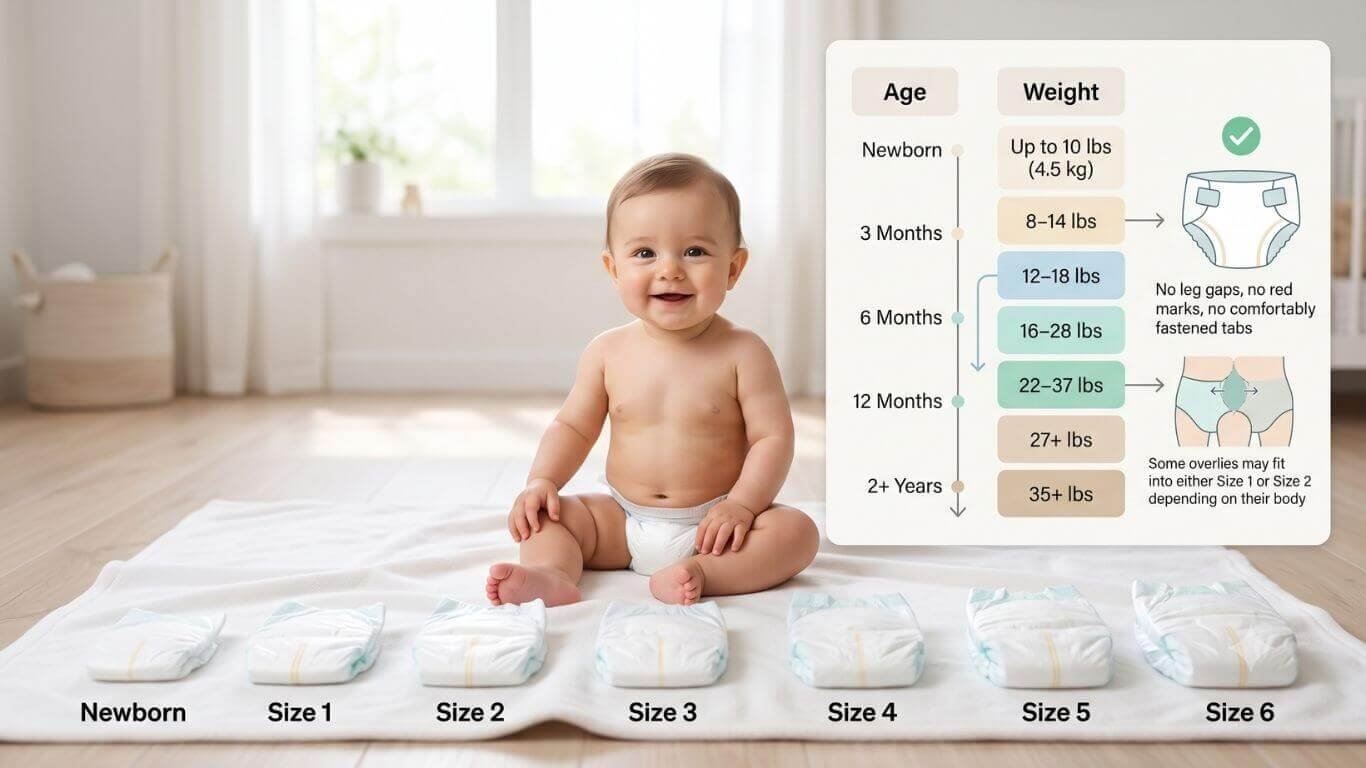
- Diaper size is determined by weight, not age – the diaper size chart by age below is a guide only, since babies grow at different rates.
- Newborn size fits babies up to 10 lbs (4.5 kg), typically birth to 4 weeks; Size 6 fits babies 35+ lbs, typically used from around 2.5 years through potty training.
- Most babies move through 3-4 diaper sizes in the first year alone as weight increases rapidly.
- Sizes overlap by design – a baby at 13 lbs may fit comfortably in either Size 1 or Size 2 depending on body shape.
- A correct fit (no leg gaps, no red marks, tabs that fasten without stretching) matters more than matching the chart exactly.
Common Questions at a Glance
Looking for a quick answer? Here’s a snapshot of the most common questions parents ask about diaper sizing.
| Question | Quick Answer |
|---|---|
| Should I choose diapers by age or weight? | Weight. Always use your baby’s current weight as the starting point, then check that the diaper fits comfortably. |
| When should I size up? | Move to the next size if you notice frequent leaks, blowouts, red marks, tight waistbands, or tabs that barely fasten. |
| Can a baby skip newborn-size diapers? | Yes. Babies born weighing 8.5–9 lbs (3.9–4.1 kg) or more often fit comfortably into Size 1 from birth. |
| Which diaper size do babies wear the longest? | Size 3. Most babies stay in Size 3 for 12–18 months, making it the longest-used diaper size. |
| Should I use a bigger diaper overnight? | Not always. If the current diaper fits well, an overnight diaper is usually a better solution than sizing up. |
| Do all diaper brands fit the same? | No. Weight ranges are similar, but the fit varies between brands. Trying another brand may solve leaks without changing sizes. |
| What’s the most important sign of the correct diaper size? | A good fit means no leaks, no deep red marks, secure leg cuffs, and tabs that fasten comfortably. |
Quick Diaper Size Finder
Need a fast answer? Use this quick reference to estimate the right diaper size based on your baby’s current weight. Then check the detailed diaper size chart and fit guide below to make sure the diaper fits comfortably.
| If Your Baby Weighs… | Start With… | Typical Age |
|---|---|---|
| Up to 10 lbs (4.5 kg) | Newborn (NB) | Birth–4 weeks |
| 8–14 lbs (3.6–6.4 kg) | Size 1 | 2–8 weeks |
| 12–18 lbs (5.4–8.2 kg) | Size 2 | 6 weeks–4 months |
| 16–28 lbs (7.3–12.7 kg) | Size 3 | 4–24 months |
| 22–37 lbs (10–16.8 kg) | Size 4 | 12–30 months |
| 27–35 lbs (12.2–15.9 kg) | Size 5 | 24–36 months |
| 35+ lbs (15.9+ kg) | Size 6 | 30 months+ |
💡 Quick Tip: If your baby’s weight falls within the overlap between two sizes, start with the smaller size if it fits comfortably. If you notice frequent leaks, tight tabs, or red marks, try the next size or a different diaper brand for a better fit.
Diaper Size Chart by Age
The chart below shows the standard sizing used by most major disposable diaper brands (Pampers, Huggies, Luvs in the US. Always check the specific brand’s packaging, since exact weight ranges vary slightly between brands.
| Size | Weight Range | Typical Age |
|---|---|---|
| Newborn (NB) | Up to 10 lbs / 4.5 kg | Birth – 4 weeks |
| Size 1 | 8-14 lbs / 3.6-6.4 kg | 2 – 8 weeks |
| Size 2 | 12-18 lbs / 5.4-8.2 kg | 6 weeks – 4 months |
| Size 3 | 16-28 lbs / 7.3-12.7 kg | 4 – 24 months |
| Size 4 | 22-37 lbs / 10-16.8 kg | 12 – 30 months |
| Size 5 | 27-35 lbs / 12.2-15.9 kg | 24 – 36 months |
| Size 6 | 35+ lbs / 15.9+ kg | 30 months+ |
Sources: Pampers, Huggies brand sizing guides (2026);
Cleveland Clinic (2022)
Notice the deliberate overlap between sizes – Size 1 and Size 2 both cover 12-14 lbs, Size 3 and Size 4 both cover 22-28 lbs. This overlap exists because weight alone does not determine fit. A baby’s body shape, rise length, and leg thickness all affect which size fits better at the same weight.
💡 Editor’s Tip: If your baby’s weight falls within the overlap between two diaper sizes, don’t rush to buy a large box of either size. Try a small pack of both first. Babies with the same weight can have different body shapes, and factors such as waist size, thigh circumference, and body length often affect diaper fit more than weight alone.
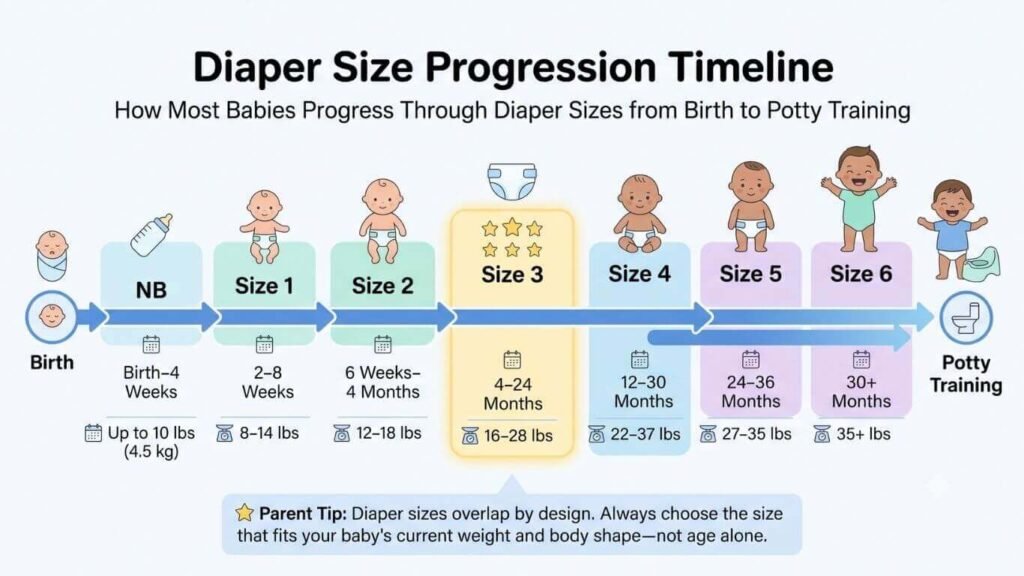
How Long Do Babies Usually Stay in Each Diaper Size?
One of the most common questions parents ask is how long a baby will stay in each diaper size. While every child grows at a different pace, the table below provides a general timeline based on healthy full-term babies. Remember that your baby’s current weight and diaper fit are always more important than age alone.
| Diaper Size | Typical Weight | Average Time Most Babies Stay in This Size |
|---|---|---|
| Newborn (NB) | Up to 10 lbs (4.5 kg) | 2–4 weeks |
| Size 1 | 8–14 lbs (3.6–6.4 kg) | 4–8 weeks |
| Size 2 | 12–18 lbs (5.4–8.2 kg) | 2–3 months |
| Size 3 | 16–28 lbs (7.3–12.7 kg) | 12–18 months |
| Size 4 | 22–37 lbs (10–16.8 kg) | 6–12 months |
| Size 5 | 27–35 lbs (12.2–15.9 kg) | 6–12 months |
| Size 6 | 35+ lbs (15.9+ kg) | Until potty training, if needed |
Most babies move through the Newborn, Size 1, and Size 2 diapers fairly quickly because growth is fastest during the first few months of life. In contrast, Size 3 usually lasts the longest, often covering 12 to 18 months, making it the most economical size to buy in larger quantities once your baby’s growth pattern becomes more predictable.
💡 Editor’s Tip: Avoid buying several large boxes of Newborn, Size 1, or Size 2 diapers before your baby arrives. During the first six months, babies can outgrow a diaper size much faster than many parents expect. Purchasing smaller packs first allows you to adjust as your baby’s growth changes.
How Many Diapers Does a Baby Use Per Day?
The number of diapers your baby uses each day generally decreases as they grow older. Newborns feed frequently and have small bladders, so they need more diaper changes than older babies and toddlers. The table below provides a general estimate for healthy babies.
| Diaper Size | Typical Age | Average Diaper Changes Per Day |
|---|---|---|
| Newborn (NB) | Birth–4 weeks | 8–12 |
| Size 1 | 2–8 weeks | 8–10 |
| Size 2 | 6 weeks–4 months | 6–8 |
| Size 3 | 4–24 months | 5–7 |
| Size 4 | 12–30 months | 4–6 |
| Size 5 | 24–36 months | 4–6 |
| Size 6 | 30 months+ | 3–5 (until potty training) |
These numbers are averages, not rules. Some babies need more frequent diaper changes because they feed more often, have sensitive skin, or pass stool more frequently. Always change a diaper promptly after a bowel movement and whenever it becomes heavily wet to help prevent leaks and diaper rash.
💡 Editor’s Tip: If you’re expecting a newborn, don’t estimate how many diapers to buy based on age alone. Daily diaper use can vary considerably during the first month. For a more detailed breakdown of daily diaper needs, read our guide on how many diapers does a newborn use a day.
Why Weight Matters More Than Age
The “Typical Age” shown in any diaper size chart is only a general guideline—not a rule. Babies gain weight at different rates during their first year, so two babies of the same age may need completely different diaper sizes.
According to the American Academy of Pediatrics (AAP), babies typically gain 150–200 grams (5–7 ounces) per week during the first three months of life. Growth then slows to about 85–140 grams (3–5 ounces) per week between 3 and 6 months. Most babies double their birth weight by 4–6 months and triple it by their first birthday. Because of this rapid growth, many babies move to the next diaper size every 4–8 weeks during their first year.
Weight isn’t the only measurement pediatricians monitor during infancy. Regular checkups also include your baby’s length and head growth to make sure development is on track. If you’d like to learn more about another important newborn growth milestone, read our guide on normal head circumference at birth.
A practical tip for parents is to buy diapers in smaller quantities until you understand your baby’s growth pattern. During the first year, some babies outgrow a diaper size much faster than expected, while others remain in the same size for several months. Waiting to buy in bulk can help reduce waste and save money.
💡 Editor’s Tip: A growth spurt can change your baby’s diaper size sooner than expected. Weigh your baby regularly during the first year, especially if you’re planning to buy diapers in bulk. A quick weight check can help you avoid purchasing a size your baby may outgrow within a few weeks.
How to Measure Your Baby’s Weight for the Right Diaper Size
Since diaper sizes are based on weight rather than age, knowing your baby’s current weight is the easiest way to choose the correct size. If you’re unsure how much your baby weighs, there are several simple and reliable ways to find out.
Use Your Baby’s Most Recent Weight Check
The most accurate option is to use the weight recorded during your baby’s most recent pediatric or well-baby visit. Babies are routinely weighed at checkups, and this measurement is the best reference when choosing a diaper size.
Weigh Your Baby at Home
If you have access to a digital baby scale, place it on a flat, stable surface and follow the manufacturer’s instructions. Home baby scales can be especially helpful during the first year, when babies grow quickly and may move to a new diaper size every few weeks.
Use a Regular Bathroom Scale
If you don’t have a baby scale, you can estimate your baby’s weight using a standard bathroom scale:
- Weigh yourself and record your weight.
- Hold your baby securely and step back onto the scale.
- Subtract your weight from the combined weight.
Although this method isn’t as precise as a baby scale, it’s usually accurate enough to help you choose the correct diaper size.
💡 Editor’s Tip: If your baby’s weight falls within the overlapping range between two diaper sizes, start by trying a small pack of each size instead of buying a large box. The best choice depends not only on weight but also on your baby’s waist, thighs, and overall body shape.
Newborn Size
Birth to Approximately 4 Weeks
Newborn diapers are designed for babies weighing up to 10 lbs (4.5 kg). Compared with Size 1 diapers, they have a narrower fit, a shorter rise, and softer waistbands to protect delicate newborn skin. Most newborn diapers also include an umbilical cord notch—a small cutout in the front waistband that helps prevent irritation while the cord stump heals during the first 1–3 weeks after birth.
Most newborns need 8–12 diaper changes per day, making it easy to underestimate how many diapers you’ll use during the first month. Before buying several packs, read our guide on how many diapers does a newborn use a day to estimate your baby’s daily diaper needs and avoid overbuying.
Once you’ve determined the correct size, choosing a comfortable, absorbent diaper is the next step. If you’re comparing different products, our guide to the best diapers for newborns reviews some of the most popular options for comfort, leak protection, and sensitive skin.
Not every baby needs newborn-size diapers. Babies born weighing 8.5–9 lbs (3.9–4.1 kg) or more often fit comfortably into Size 1 from birth. For this reason, many parents buy only one small pack of newborn diapers before delivery and purchase more after confirming their baby’s birth weight.
What About Premature Babies?
Premature (preterm) babies often need preemie-size diapers or may stay in newborn-size diapers longer than full-term babies because they are typically born with a lower birth weight. Since growth patterns vary widely among premature infants, weight—not corrected age or chronological age—should always be the primary guide when choosing a diaper size.
Many diaper manufacturers offer Preemie (P) sizes designed for babies weighing less than 6 pounds (2.7 kg). As your baby gains weight, you can gradually transition to newborn diapers and then larger sizes based on the manufacturer’s recommended weight range and your baby’s overall fit.
If your baby was born prematurely or has ongoing growth or medical concerns, follow the advice of your pediatrician or neonatal care team rather than relying solely on a diaper size chart. Regular weight checks and proper diaper fit are the best ways to ensure your baby stays comfortable while reducing the risk of leaks and skin irritation.
💡 Editor’s Tip: Premature babies often gain weight rapidly during the first few months after leaving the hospital. Check your baby’s weight regularly and buy smaller packs of diapers until their growth pattern becomes more predictable.
Size 5 and Size 6: Approximately 2–3.5+ Years
Size 5 diapers fit toddlers weighing 27–35 lbs (12.2–15.9 kg), while Size 6 is designed for children weighing 35 lbs (15.9 kg) or more. These larger sizes are commonly used by toddlers who haven’t completed potty training and often provide extra absorbency for overnight use.
As children become more independent, many families gradually reduce nighttime feedings while encouraging healthy sleep habits and potty training. If you’re approaching this stage, our guide on how to stop nighttime feedings explains when this transition is appropriate and offers practical tips for making it easier.
Many toddlers in Size 5 and Size 6 also begin using pull-up training pants as they learn to recognize potty cues and transition away from diapers.
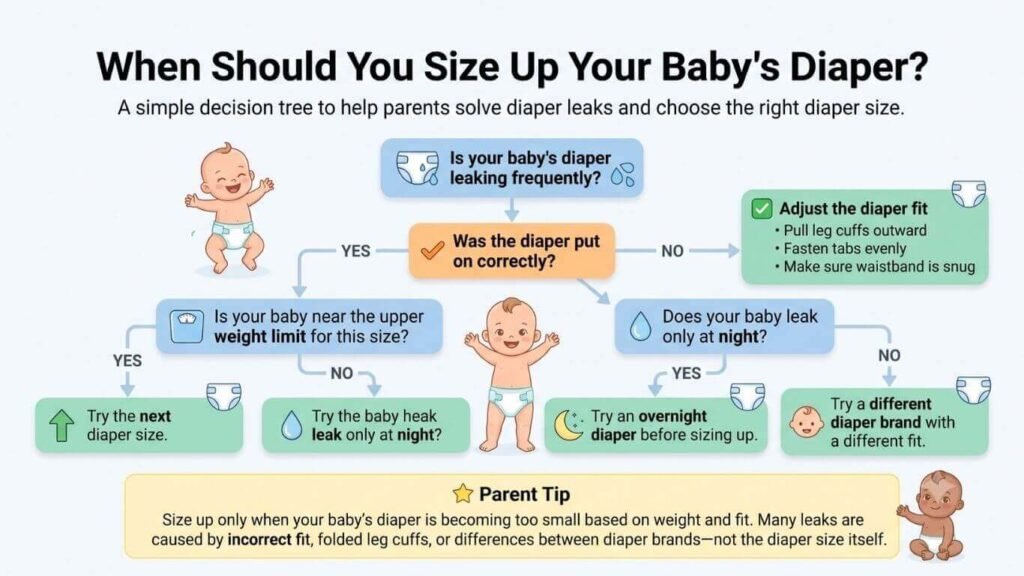
When Should You Size Up Your Baby’s Diaper?
Light pressure marks that disappear quickly are usually normal. However, deep red marks, persistent indentations, or ongoing skin irritation around the waist or thighs may indicate that the diaper is too small. A tighter diaper can also trap more moisture and increase friction against your baby’s skin, which may contribute to diaper rash. Moving to the next diaper size often provides a more comfortable fit while helping keep the skin healthier.
Here are the most common signs that your baby has outgrown their current diaper:
Frequent Leaks
If your baby’s diaper leaks regularly—even when it’s put on correctly and changed often—it may no longer have enough absorbent capacity or provide a secure fit. Before changing sizes, make sure the diaper is fastened properly and the leg cuffs are pulled outward. If leaks continue, it’s usually time to size up.
Frequent Blowouts
Frequent blowouts, especially up the back of the diaper, often happen when the diaper has become too small. As your baby grows, a snug diaper may not provide enough coverage to contain bowel movements. Moving to the next size can help reduce messy accidents.
Red Marks on the Skin
Light pressure marks that disappear quickly are generally normal. However, deep red marks, persistent indentations, or signs of skin irritation around the waist or thighs may indicate that the diaper is too tight. A larger size often provides a more comfortable fit and reduces pressure on your baby’s skin.
Tight Waistband
A properly fitting diaper should sit comfortably around your baby’s waist without digging into the skin. You should be able to slide two fingers between the waistband and your baby’s belly. If the waistband feels tight or leaves noticeable marks, consider moving to the next size.
Tabs Barely Reach the Front
Most disposable diapers include fastening tabs that should close comfortably near the center of the front waistband. If the tabs barely reach, need to be stretched tightly, or frequently come undone, your baby has likely outgrown the current size.
The Diaper Sits Below the Belly Button
When a diaper consistently sits below your baby’s belly button instead of covering the lower abdomen, it may no longer provide enough rise for your baby’s body. A diaper that rides too low is also more likely to leak during active movement.
💡 Editor’s Tip: Frequent leaks don’t always mean your baby needs a larger diaper. First, make sure the diaper is fastened correctly, the leg cuffs are pulled outward, and the diaper hasn’t reached its absorbency limit. If the fit is correct and leaks continue, then it’s time to consider the next size or try a different brand.
When You Should Not Size Up
Not every leak means your baby needs a larger diaper. In many cases, the problem is the diaper’s fit or how it’s being put on—not the size itself.
Before moving up to the next size, check for these common issues:
- Leg cuffs are tucked inward. The ruffled leg cuffs should always be pulled outward to create a leak-proof seal around your baby’s thighs.
- The diaper isn’t fastened correctly. Make sure the waistband sits level and the fastening tabs are secured evenly on both sides.
- The diaper is too loose. A loose waistband or gaps around the legs can allow urine or stool to escape, even if the diaper is the correct size.
- The diaper is overly full. Diapers should be changed regularly. A saturated diaper is more likely to leak, regardless of its size.
- Your baby needs a different brand. Babies have different body shapes, and one brand may fit your baby better than another, even if the weight range is the same.
Expert Tip: If you’ve checked these factors and your baby is still experiencing frequent leaks, blowouts, or tightness, it’s usually a sign that it’s time to move up to the next diaper size.
How to Tell a Diaper Fits Correctly, Regardless of Chart Size
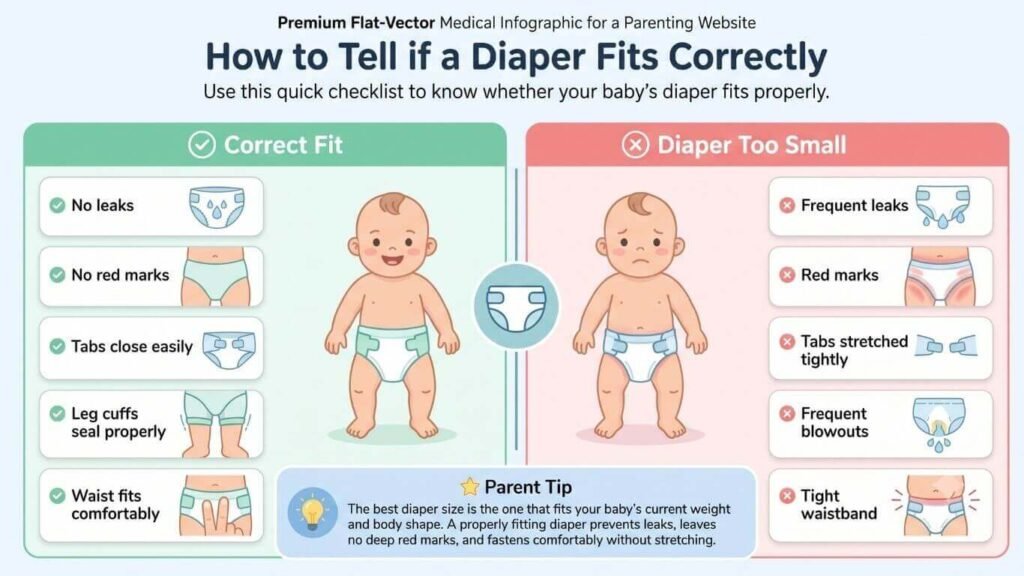
The chart is a starting point. The actual fit check matters more than matching the chart exactly.
Signs the diaper fits correctly:
- The waistband sits flat against the belly – two fingers should slide under it without pulling
- Leg cuffs seal around both thighs with no gaps
- Tabs fasten without stretching to their limit
- No deep red marks at the waist or thighs after removal
Signs to size up:
- Tabs are fully extended and barely closing
- Frequent leaks or blowouts despite correct application
- Red marks appear regularly at the waist or leg bands
- The diaper looks stretched or puckered around the legs
Signs to size down (less common):
- Gaps appear at the leg openings, especially when the baby bends their knees
- The diaper sags noticeably when wet
- The front waistband folds over on itself
A diaper that is too small doesn’t just increase the risk of leaks—it can also trap moisture and create extra friction against your baby’s skin. Over time, this combination may contribute to diaper rash, skin irritation, and discomfort. Choosing the correct diaper size, changing diapers regularly, and keeping your baby’s skin clean and dry are simple steps that can help reduce the risk of diaper rash.
Should You Use a Bigger Diaper at Night?
Overnight leaks are a common concern for parents, especially as babies begin sleeping for longer stretches. While moving up one diaper size can sometimes help, it’s not always the best solution.
If your baby’s current diaper fits well during the day but frequently leaks overnight, first check that it is being worn correctly and changed right before bedtime. Make sure the waistband fits snugly, the leg cuffs are pulled outward, and the diaper isn’t already close to its absorbency limit before your baby goes to sleep.
If your baby is near the upper end of the recommended weight range for their current size and consistently experiences overnight leaks, trying the next diaper size may provide additional absorbency and better coverage. However, the larger diaper should still fit securely without gaps around the legs or waist.
Many diaper brands also offer overnight diapers, which are specially designed with extra absorbent materials to keep babies dry for longer periods. If your baby’s daytime diaper fits properly but leaks only at night, switching to an overnight diaper is often a better solution than sizing up.
💡 Editor’s Tip : Don’t move to a larger diaper solely because of nighttime leaks. If the current diaper fits correctly and your baby is well within the recommended weight range, an overnight diaper or more absorbent brand may solve the problem more effectively than increasing the size.
If nighttime leaks happen only occasionally, changing your baby’s diaper right before bedtime may solve the problem. If leaks continue every night despite a proper fit, consider using an overnight diaper before moving up to the next size.
Common Diaper Sizing Mistakes Parents Make
Even with a diaper size chart, it’s easy to make small mistakes that can lead to leaks, discomfort, or unnecessary expense. Avoiding these common issues can help keep your baby comfortable while saving money on diapers.
Buying Too Many Newborn Diapers
Many parents stock up on newborn diapers before their baby arrives. However, babies grow at different rates, and some are born large enough to wear Size 1 from the very first day. Buying only one small pack of newborn diapers before delivery is usually the safest approach until you know your baby’s birth weight.
Choosing a Diaper Based on Age Instead of Weight
One of the most common mistakes is selecting diapers according to your baby’s age. Age is only a rough guideline because babies grow at different speeds. Always use your baby’s current weight as the starting point, then check that the diaper fits comfortably around the waist and legs.
Ignoring Red Marks
Light marks that disappear within a few minutes are generally normal. However, deep red marks, persistent indentations, or skin irritation around the waist or thighs can indicate that the diaper is too small or too tight. If these signs appear regularly, it’s time to reassess the fit or move up to the next size. Ignoring persistent red marks can also increase skin irritation over time and may contribute to diaper rash. If redness doesn’t improve after switching sizes or changing diapers more frequently, consult your pediatrician.
Folding the Leg Cuffs Inward
The inner leg cuffs (also called leak guards) are designed to sit outside your baby’s thighs and create a seal that helps prevent leaks and blowouts. If the cuffs are folded inward after putting on the diaper, even the correct size may leak.
Waiting Too Long to Size Up
Many parents try to finish an entire box of diapers before buying the next size. While this can seem economical, using a diaper that’s too small often leads to more leaks, blowouts, and discomfort. If your baby’s weight is approaching the upper end of the recommended range and the diaper is becoming tight, moving up one size is usually the better choice.
Assuming Every Brand Fits the Same
Diaper sizes are similar across most brands, but the shape and cut can vary. If one brand leaks consistently while another fits well at the same weight, trying a different brand may solve the problem without changing diaper sizes.
💡 Parent Tip: The best-fitting diaper isn’t always the one that matches your baby’s age perfectly—it’s the one that fits securely around the waist and legs, prevents leaks, and keeps your baby comfortable.
How Diaper Sizing Differs Between Brands
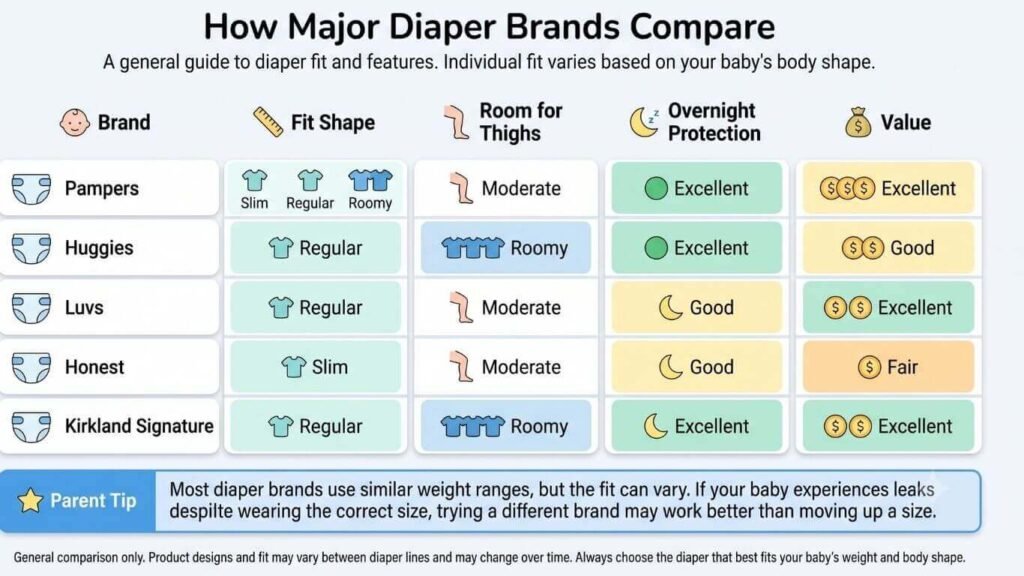
The weight ranges in the chart above are close to universal, but the actual cut, rise, and leg opening shape vary by brand. Pampers tends to run slightly narrower in the hip than Huggies. Store brands (Target’s Up & Up, Walmart’s Parent’s Choice) often have a wider, more generous waistband.
If a baby is leaking consistently at the correct chart size, trying a different brand at the same size often solves the problem faster than sizing up.
How Major Diaper Brands Compare
Although most diaper brands use similar weight ranges, their overall fit can feel quite different. Some brands have a slimmer cut, while others provide more room around the thighs or waist. If your baby experiences frequent leaks despite wearing the correct size, trying a different brand may solve the problem without moving up to the next size.
| Brand | General Fit | Best For |
|---|---|---|
| Pampers | Slimmer fit with a contoured waist | Babies with a lean body shape |
| Huggies | Roomier through the hips and thighs | Babies with chubbier thighs or a broader build |
| Luvs | Standard fit with reliable absorbency | Families looking for an affordable everyday diaper |
| Honest | Trim, flexible design | Babies who prefer a lightweight diaper |
| Kirkland Signature | Generous fit with good overall coverage | Families wanting a balance of value and performance |
Remember that these are general fit characteristics, not strict rules. Two babies with the same weight may fit different brands differently because of variations in body shape, waist size, thigh circumference, and movement. If one brand leaks consistently while another fits well at the same size, the issue is often the diaper’s design rather than the size itself.
💡 Parent Tip: If your baby falls within the overlapping weight range between two sizes, try a different brand before automatically sizing up. Sometimes a different cut provides a better seal around the legs and waist without changing the diaper size.
Disposable vs. Cloth Diapers: Does Sizing Work the Same Way?
Whether you choose disposable diapers or cloth diapers, the goal is the same—a comfortable fit that prevents leaks while allowing your baby to move freely. However, the way sizing works is slightly different.
Disposable diapers are typically sized by weight, using standardized ranges such as Newborn, Size 1, Size 2, and so on. Most major brands follow similar weight guidelines, making it easier to know when it’s time to move to the next size.
Cloth diapers, on the other hand, often use adjustable snaps or hook-and-loop closures that allow one diaper to fit babies across a wider weight range. Instead of moving through several numbered sizes, many modern cloth diapers are designed as “one-size” systems that grow with your baby. Even so, a proper fit around the waist and legs is just as important to prevent leaks and keep your baby comfortable.
If you’re considering reusable diapers or wondering whether cloth diapers are the right choice for your family, read our guide to the best cloth diapers for newborns, where we compare popular options, their sizing systems, and the features parents should look for before buying.
FAQ
What diaper size should a baby be at each age?
As a loose guide: newborn size from birth to 4 weeks, Size 1 from 2-8 weeks, Size 2 from 6 weeks to 4 months, Size 3 from 4-24 months, Size 4 from 12-30 months, and Size 5-6 from 2-3.5+ years. Actual sizing should always follow the baby’s current weight rather than age, since growth rates vary significantly between babies.
How do I know when to size up my baby’s diaper?
Size up when the tabs are fully extended and barely fastening, when leaks or blowouts happen despite correct application, or when red marks appear regularly at the waist or legs. It is better to size up a little early than to wait until the current size is clearly too small.
Do all diaper brands use the same size chart?
The weight ranges are similar across major brands, but the cut and fit vary. Pampers, Huggies, and store brands all use comparable weight bands for each size number, but a baby may fit one brand’s Size 2 better than another’s at the exact same weight.
Can a baby skip newborn size?
Yes. Babies born at 8.5 lbs or above often fit better in Size 1 from birth, since newborn diapers are cut for smaller bodies. Buy only a small newborn pack before the birth in case this applies.
Which diaper size do babies stay in the longest?
Most babies spend the longest time in Size 3, which covers 16-28 lbs and often spans 12-18 months of use. This makes Size 3 the most practical size to buy in larger bulk quantities.
Why does my newborn need so many diaper changes?
Newborns feed frequently, have small stomachs and bladders, and usually pass stool more often than older babies. As a result, most newborns need 8–12 diaper changes each day during the first few weeks of life.
Because feeding and diaper changes are closely connected, parents often find it helpful to understand typical newborn feeding patterns as well. Our guide on how often to feed a newborn at night explains how nighttime feedings can influence diaper changes during the early weeks.
💡 Editor’s Tip: The best diaper size isn’t determined by your baby’s age—it’s determined by how well the diaper fits. A properly fitting diaper should sit comfortably around the waist, seal around the legs, prevent leaks, and leave no persistent red marks after removal.
Key Takeaways
- Diaper size is determined by weight, not age – use the chart as a loose guide and the baby’s current weight as the deciding factor.
- Sizes overlap intentionally; body shape determines which size fits better within an overlap range.
- Most babies move through 3-4 sizes in the first year alone, so buy in smaller quantities until growth rate is predictable.
- Size 3 covers the widest age range and is worth buying in bulk once reached.
- A correct fit check – no gaps, no red marks, tabs that fasten without stretching – matters more than chart precision.
Final Thoughts
Choosing the right diaper size doesn’t have to be complicated. While age can provide a rough guideline, your baby’s current weight and the way the diaper fits are the most reliable indicators when selecting the correct size. A well-fitting diaper should sit comfortably around the waist, seal securely around the legs, and prevent leaks without leaving persistent red marks.
Remember that every baby grows at a different pace. It’s perfectly normal for two babies of the same age to wear different diaper sizes or to fit comfortably into two overlapping sizes. Checking your baby’s weight regularly and paying attention to signs of a good fit will help you choose the right diaper as your child grows.
As your baby reaches new milestones, don’t be afraid to try a different size or even a different brand if leaks or discomfort become a problem. With the right fit, your baby will stay more comfortable, experience fewer leaks, and be better protected from skin irritation throughout every stage of diapering.
Medical Disclaimer
This article is intended for educational and informational purposes only and should not replace professional medical advice, diagnosis, or treatment. Every baby grows at a different rate, and diaper sizing recommendations may vary based on individual growth and body shape. If your baby has poor weight gain, growth concerns, persistent diaper leaks despite proper sizing, skin irritation, or any other health concerns, consult your pediatrician or another qualified healthcare professional for personalized guidance.
References
The information in this article is based on guidance from reputable pediatric organizations, healthcare institutions, and diaper manufacturers.
- American Academy of Pediatrics (AAP). HealthyChildren.org. Infant Growth and Development. Available at: https://www.healthychildren.org
- Centers for Disease Control and Prevention (CDC). Clinical Growth Charts. Available at: https://www.cdc.gov/growthcharts/clinical_charts.htm
- Cleveland Clinic. Diapering Your Baby and Preventing Diaper Rash. Available at: https://health.clevelandclinic.org
- Pampers. Diaper Size and Weight Chart. Available at: https://www.pampers.com
- Huggies. Diaper Size Guide. Available at: https://www.huggies.com
- Luvs. Diaper Size Guide. Available at: https://www.luvsdiapers.com