

TL;DR:
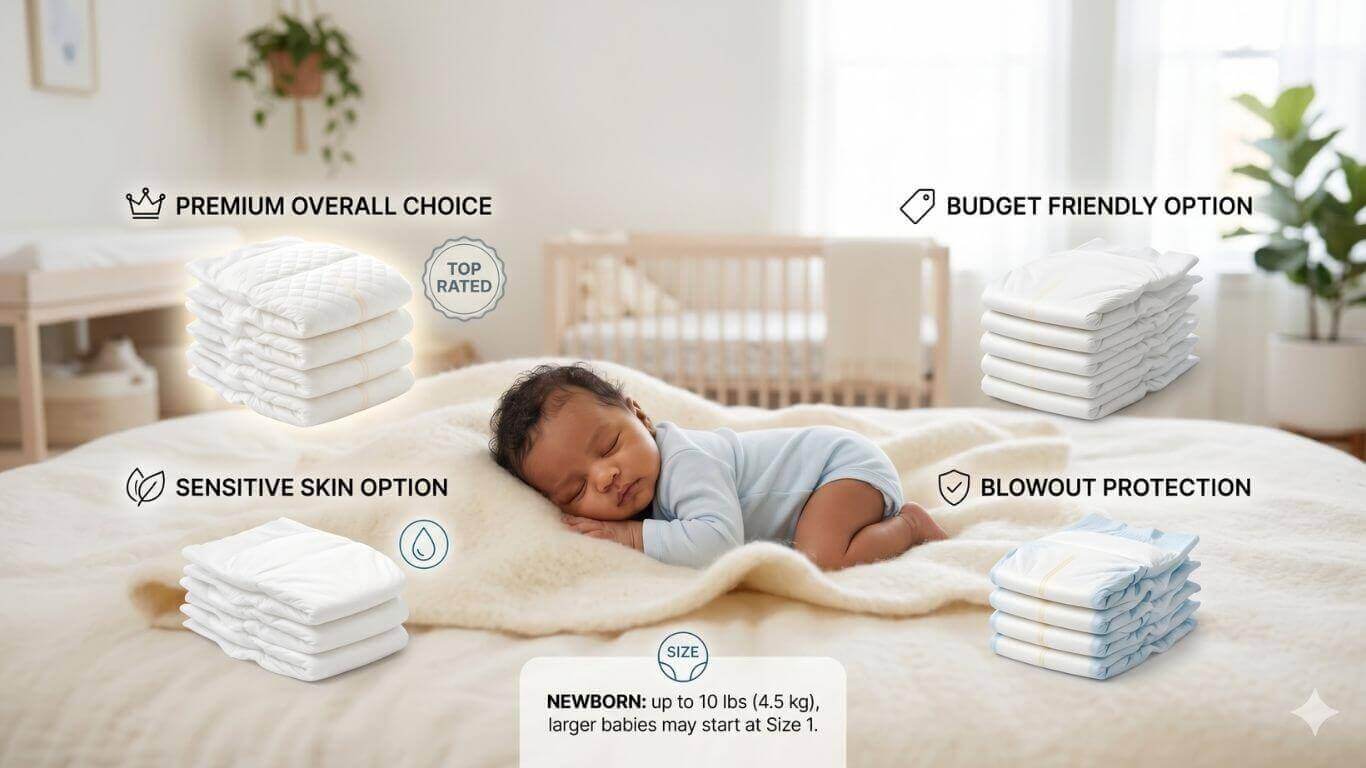
- Best overall: Pampers Swaddlers — Our top starting point for most newborns, combining a soft feel, reliable absorbency, newborn-friendly fit, wetness indicator, and umbilical cord notch.
- Best for blowout containment: Huggies Little Snugglers — A strong choice for babies prone to leaks and back blowouts, thanks in part to its pocketed back waistband.
- Best for sensitive skin: Pampers Pure Protection — A fragrance-free option for parents who prefer to minimize added fragrance and other potential irritants.
- Best budget value: Kirkland Signature — A practical choice for Costco members who want good overall performance at a lower cost per diaper.
- Best premium option: Coterie — A higher-priced choice for parents who prioritize softness, premium materials, and detailed material information.
- Newborn sizing: Newborn diapers commonly cover babies up to around 10 lb (4.5 kg), but weight ranges vary by brand. Some larger newborns may be more comfortable in Size 1 from birth.
Quick Answer: What Is the Best Diaper for a Newborn?
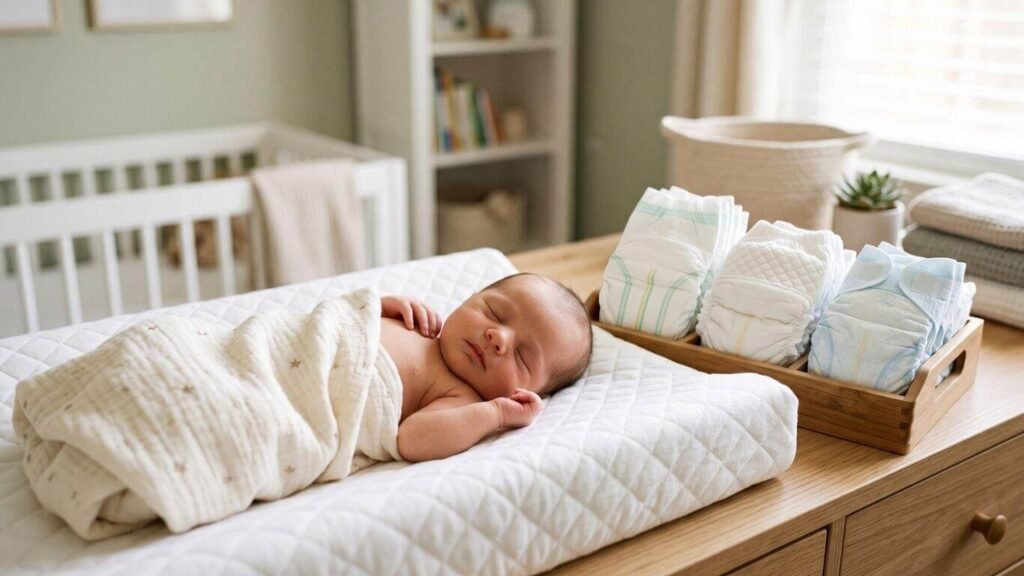
There is no single diaper that is best for every newborn. Fit, body shape, skin sensitivity, and your baby’s individual needs all matter.
For most families, Pampers Swaddlers are a strong starting point because they offer a good balance of softness, absorbency, fit, and newborn-friendly features. Huggies Little Snugglers are an excellent alternative, especially for babies who are prone to leaks or back blowouts.
If you’re buying diapers before your baby arrives, start with a small pack rather than a large box. This lets you see which diaper fits your baby best before buying in bulk.
- Best overall starting point: Pampers Swaddlers
- Best alternative for blowouts and leaks: Huggies Little Snugglers
- Best fragrance-free mainstream option: Pampers Pure Protection
- Best budget value: Kirkland Signature, once your baby fits its Size 1 range
Our most important advice: prioritize fit over brand reputation. The best newborn diaper is the one that fits your baby securely, prevents leaks without causing uncomfortable pressure, and works well for your baby’s skin.
Our Quick Recommendation
If you’re buying diapers before your baby arrives and don’t know where to start, buy a small pack of Pampers Swaddlers or Huggies Little Snugglers rather than a large box. Both are strong mainstream options, but babies differ in body shape and diaper fit.
If your baby has frequent back blowouts, try Huggies Little Snugglers. If fragrance-free materials are important to you, consider Pampers Pure Protection or another fragrance-free option. If keeping costs low is the priority, Kirkland Signature is worth considering once your baby fits its Size 1 range.
What to Look for in the Best Diapers for Newborns
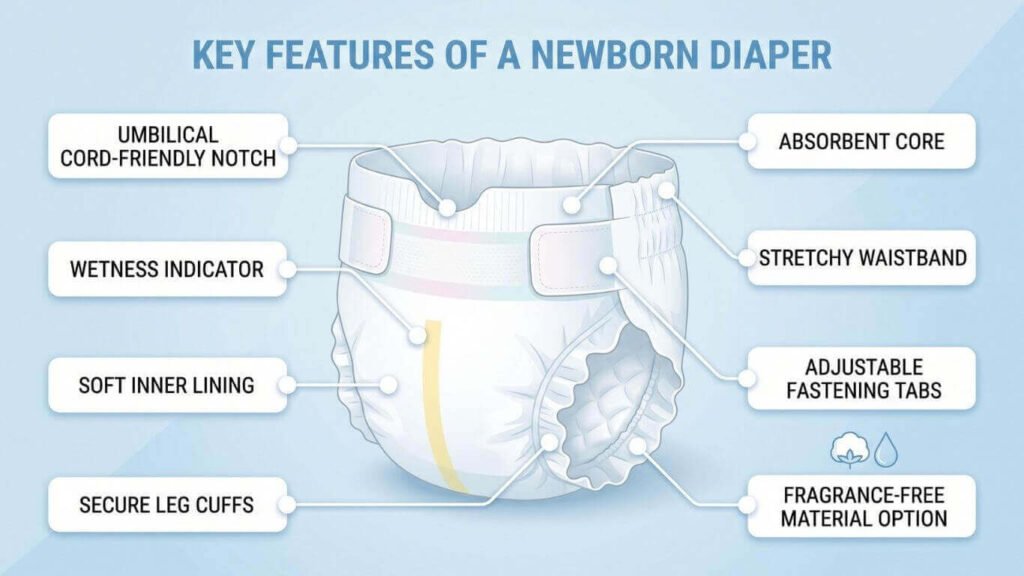
Newborn diapers need to do more than absorb urine. During the first few weeks, babies are small, diaper changes are frequent, stools can be loose, and the umbilical cord stump is still healing. Choosing a diaper with the right features can make everyday diaper changes easier and help reduce leaks, blowouts, and skin irritation.
Here are the most important features to consider when choosing a diaper for your newborn.
Umbilical Cord-Friendly Design
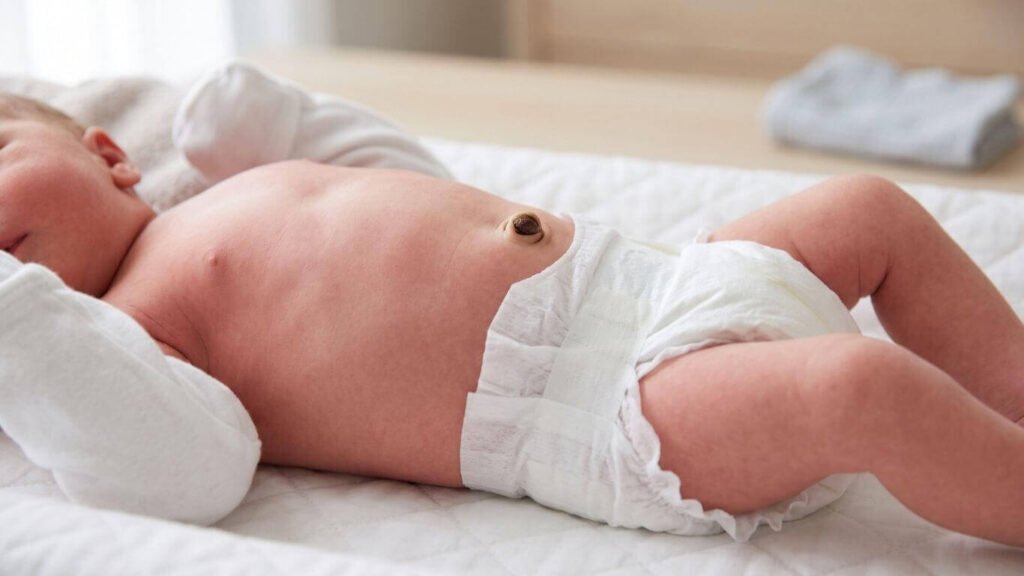
A low waistband or umbilical cord notch helps keep the diaper away from the healing cord stump. This can be especially useful during the first days or weeks after birth, while the stump is still attached.
If a diaper does not have a cord notch, make sure the front waistband sits low enough that it does not rub against or cover the stump.
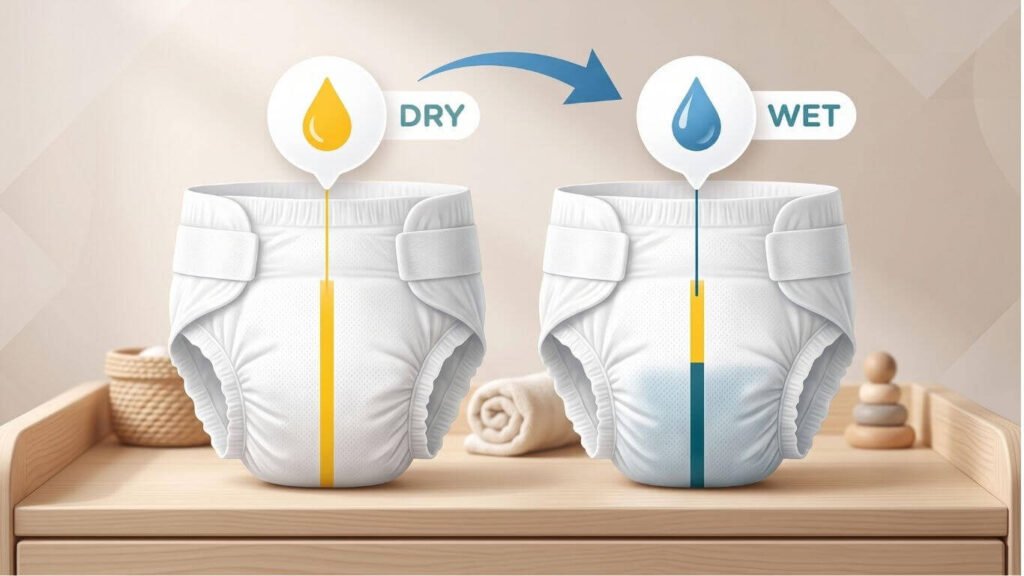
Wetness Indicator
A wetness indicator is a color-changing strip that shows when the diaper is wet. It allows parents to check the diaper without opening or removing it.
This can be particularly convenient during nighttime changes and in the early weeks when newborns need frequent diaper changes.
Secure Leg Cuffs
Secure leg cuffs help create a seal around the baby’s thighs and can reduce the chance of leaks and blowouts.
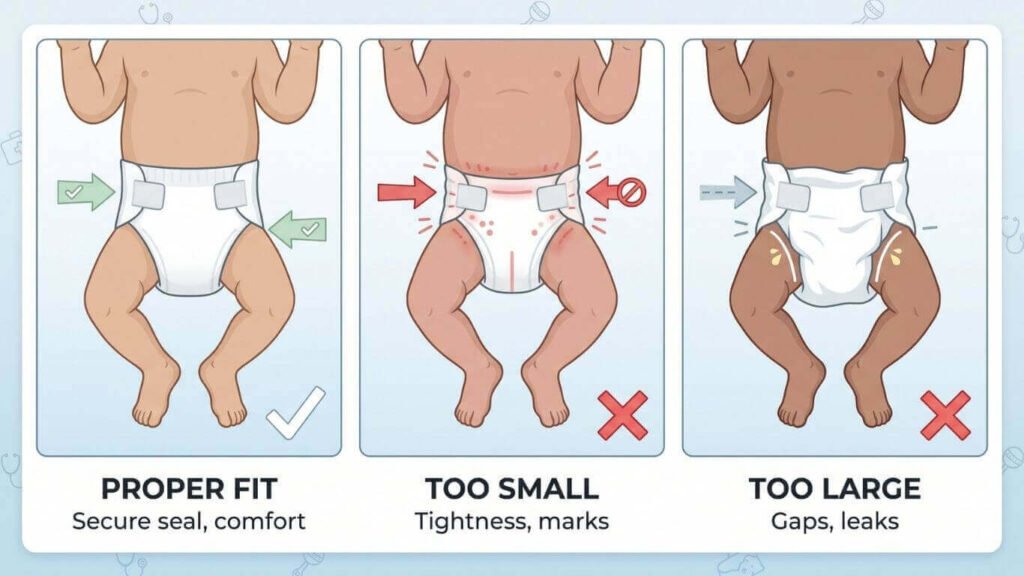
The cuffs should sit comfortably against the skin without digging into the legs. If you regularly notice gaps around the thighs or leaks despite correct application, another size or diaper shape may provide a better fit.
Soft Inner Lining
A soft inner lining provides a comfortable surface against delicate newborn skin.
While softness is important, it should be considered alongside fit, absorbency, and how your baby’s skin actually responds to the diaper. A softer diaper is not necessarily a better choice if it does not fit properly.
Absorbency
Good absorbency helps manage frequent urination and draws moisture away from the baby’s skin.
A diaper with reliable moisture management can also help reduce leaks between changes. However, even a highly absorbent diaper can leak if it is too small, too large, or incorrectly positioned.
Newborn-Friendly Fit
Fit is one of the most important factors when choosing a newborn diaper. A properly fitting diaper should sit securely around the waist and legs without leaving significant gaps or uncomfortable pressure.
Newborns have different body shapes, so one brand may fit a small, lean baby better while another may work better for a baby with fuller thighs or a rounder waist.
Stretchy Waistband and Tabs
A stretchy waistband and adjustable fastening tabs allow the diaper to adapt to your baby’s changing body shape.
The tabs should fasten securely without being overly tight, while the waistband should sit comfortably around the baby’s waist. As your baby grows, these features can help maintain a secure fit between diaper sizes.
Fragrance-Free Materials
Fragrance-free diapers may be preferable for parents who want to minimize added fragrance, particularly when their baby has easily irritated or sensitive skin.
However, fragrance-free does not automatically mean a diaper is medically better for every baby. Skin sensitivity varies, so pay attention to how your baby’s skin responds to the diaper.
Choose Features Based on Your Baby’s Needs
All of the diapers reviewed in this guide offer features suitable for newborn use, but their strengths differ. One may provide a better fit for a small or lean baby, while another may offer better containment for a baby who frequently has blowouts.
For that reason, we recommend trying two or three brands in small packs before buying in bulk. Your baby’s individual body shape, skin tolerance, and real-world diaper performance are ultimately more important than brand reputation alone.
These recommendations are category-based rather than a strict 1-to-7 ranking.
Best Diapers for Newborns: Our Top Picks
The diapers below are category-based recommendations, not a strict 1-to-7 ranking. Each diaper has different strengths, and the best choice for your newborn will ultimately depend on fit, body shape, skin sensitivity, leak patterns, and your budget.
1. Pampers Swaddlers — Best Overall Newborn Diaper
Pampers Swaddlers is our best overall starting point for most newborns because it combines softness, absorbency, newborn-friendly fit, and convenient features such as a wetness indicator and umbilical cord notch.
Independent testing has also placed Swaddlers among the stronger overall diaper options, supporting its position as a practical choice for parents. However, no diaper fits every baby equally well, so your baby’s individual fit should ultimately guide your decision.
Swaddlers are also widely available and commonly used in U.S. hospitals. While hospital use can be useful context for parents, it should not be interpreted as proof that Swaddlers are the best diaper for every newborn.
Key Features
- Soft inner lining: Provides a soft, comfortable surface against newborn skin.
- Wetness indicator: Helps parents tell when the diaper is wet without opening it.
- Umbilical cord notch: Available on applicable newborn and preemie sizes to help keep the waistband away from the healing cord stump.
- Flexible fit: Designed to fit securely around the waist and legs while allowing movement.
- Absorbent core: Helps manage moisture and provide everyday leakage protection.
- Fragrance-free: Pampers’ current U.S. product information describes Swaddlers as fragrance-free, hypoallergenic, and dermatologist tested. Because product formulations can change, check the current package labeling when purchasing.
Where Pampers Swaddlers Stand Out
The biggest strength of Swaddlers is their overall balance. Rather than focusing on just one feature, they combine softness, absorbency, fit, availability, and newborn-friendly details in one mainstream diaper.
That makes Swaddlers a particularly good starting point for most newborns, especially for parents who want a familiar and widely available option.
Swaddlers may also work particularly well for smaller or leaner babies, although newborn body shapes vary. If you notice gaps around the legs, frequent leaks, or persistent marks on your baby’s skin, another size or brand may provide a better fit.
Where Pampers Swaddlers May Fall Short
The main drawback is price. Swaddlers generally cost more per diaper than many store-brand and budget options.
Fit can also vary from baby to baby. A diaper that works well for one newborn may not work as well for another with a different body shape. If your baby experiences repeated leaks or blowouts despite correct application, try adjusting the fit or comparing another size or brand rather than assuming the diaper is defective.
There is also some variation in fragrance-related reporting between current manufacturer information and independent testing. Pampers currently describes the U.S. Swaddlers line as fragrance-free, while at least one 2026 independent test reported detecting a noticeable scent in the product tested. For that reason, it is better to rely on the current product label and manufacturer information rather than making a universal claim about fragrance.
Price
Varies by retailer, package size, diaper size, promotions, and purchasing options.
Because diaper prices change frequently, we recommend checking the current retailer price rather than treating a fixed price as a permanent product specification.
Best For
Most newborns and parents looking for the best overall balance of softness, fit, absorbency, convenience, and availability.
Editorial takeaway: If you’re unsure where to start, Pampers Swaddlers is one of the first newborn diapers we’d recommend trying in a small pack. But don’t buy a large supply until you know it fits your baby well.
2. Huggies Little Snugglers — Best for Blowout & Leak Containment
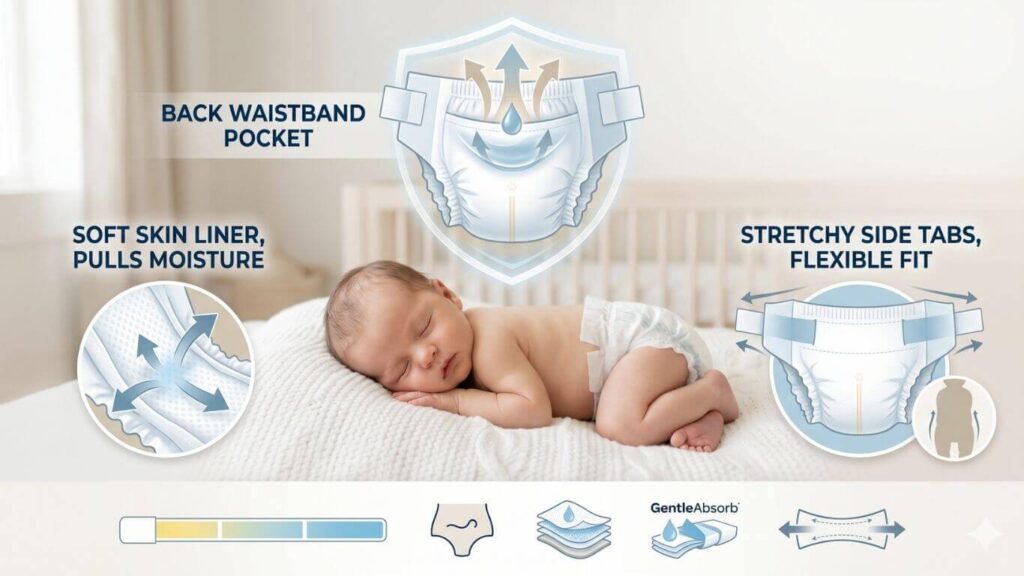
Huggies Little Snugglers is our top pick for newborns who are prone to leaks or back blowouts. Its pocketed back waistband provides an additional containment barrier that can help keep loose stool from escaping up the baby’s back.
This feature can be particularly useful during the newborn stage, when babies often have frequent, loose stools. Recent independent testing has also found Little Snugglers to perform particularly well for dryness, making it a strong option for both blowout containment and everyday leak protection.
Key Features
- Pocketed back waistband: Provides an additional barrier designed to help contain loose stool and reduce back blowouts.
- GentleAbsorb liner: Designed to quickly draw moisture away from the baby’s skin.
- Umbilical cord cutout: Available in newborn sizing to help keep the diaper away from the healing umbilical cord stump.
- Wetness indicator: Available in applicable newborn sizes to help parents know when the diaper is wet.
- Flexible fastening tabs: Allow parents to adjust the diaper for a secure and comfortable fit.
- Containment-focused design: The combination of the pocketed waistband and leg barriers helps contain both urine and loose stool.
Where Huggies Little Snugglers Stand Out
The pocketed back waistband is Little Snugglers’ biggest advantage. For parents dealing with repeated back blowouts, this additional barrier makes the diaper particularly worth trying.
Little Snugglers also performs well for leak protection and dryness. Recent independent testing found strong moisture-management performance, making it more than simply a diaper designed to prevent blowouts.
Its shape may also work particularly well for some babies with a rounder or fuller body shape, although fit varies from baby to baby.
Where Huggies Little Snugglers May Fall Short
The main limitation is individual fit. Some babies may fit better in Pampers Swaddlers, while others may find the Huggies shape more comfortable and secure.
If you notice gaps around the legs, persistent marks around the waist or thighs, or repeated leaks despite applying the diaper correctly, try adjusting the fit or comparing another size or brand.
Keep in mind that no diaper can prevent every blowout. Blowouts can happen when a diaper is too small, incorrectly positioned, or simply overwhelmed by the amount or consistency of stool.
Price
Varies by retailer, package size, diaper size, promotions, and purchasing options.
Because diaper prices can change frequently, check the current retailer price before purchasing.
Best For
Newborns prone to back blowouts or leaks and parents who want extra rear containment and strong dryness performance.
3. Pampers Pure Protection — Best Fragrance-Free Mainstream Option
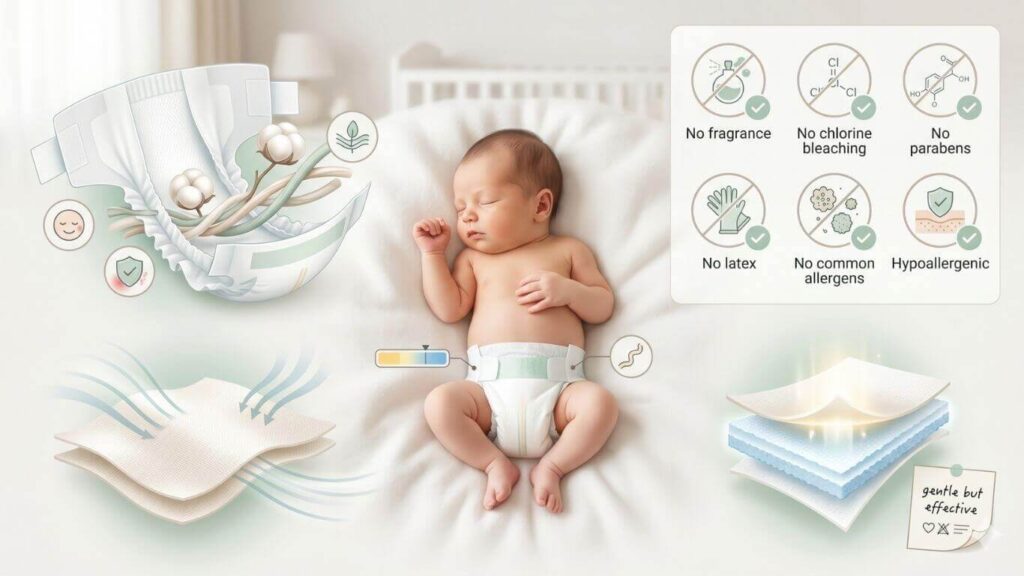
Pampers Pure Protection is our top fragrance-free mainstream pick for parents who prefer to minimize added fragrance and certain other ingredients in a newborn diaper.
Pampers describes Pure Protection as fragrance-free and hypoallergenic, and states that it is made without elemental chlorine, parabens, and natural rubber latex. These characteristics may appeal to parents who are particularly mindful of the materials used in their baby’s diaper.
However, fragrance-free does not automatically mean medically better for eczema or other skin conditions. Every baby’s skin is different, so the most important consideration is how your baby’s skin responds to the diaper.
Key Features
- Fragrance-free: A practical choice for parents who prefer to avoid added fragrance.
- Hypoallergenic: Pampers markets Pure Protection as hypoallergenic.
- No elemental chlorine: Made without elemental chlorine bleaching.
- No parabens: Pampers states that the product is made without parabens.
- No natural rubber latex: Useful for parents who prefer to avoid natural rubber latex.
- Wetness indicator: Helps parents identify when the diaper is wet.
- Umbilical cord notch: Available in applicable newborn sizes to help keep the diaper away from the healing cord stump.
- Soft inner materials: Designed to provide a comfortable surface against newborn skin.
Where Pampers Pure Protection Stands Out
Its biggest advantage is the combination of fragrance-free materials, sensitive-skin-focused features, and mainstream availability.
For parents who prefer to avoid added fragrance but don’t want to move to a more expensive premium diaper, Pure Protection provides a practical middle-ground option.
It also gives families a fragrance-free alternative within the Pampers range, making it worth considering alongside Swaddlers.
Where Pampers Pure Protection May Fall Short
The main drawback is price. Pure Protection generally costs more than standard Pampers and many budget or store-brand alternatives.
It’s also important not to assume that switching to a fragrance-free diaper will solve every skin problem. Diaper rash can have several causes, including moisture, friction, prolonged exposure to urine or stool, and other skin conditions.
If your baby’s skin becomes persistently red, cracked, swollen, or painful, or doesn’t improve with basic diaper-care measures, speak with your pediatrician rather than repeatedly changing diaper brands.
Price
Varies by retailer, package size, diaper size, promotions, and purchasing options.
Check current retailer pricing before purchasing, as diaper prices can change over time.
Best For
Parents looking for a fragrance-free mainstream diaper and families who want to minimize added fragrance and certain other potential irritants.
Editorial takeaway: We recommend describing Pure Protection as the “Best Fragrance-Free Mainstream Option” rather than simply “Best for Sensitive Skin.” This keeps the recommendation focused on the diaper’s product characteristics without implying that it treats or prevents eczema or other skin conditions.
4. Kirkland Signature — Best Budget Value
Kirkland Signature is our top budget-value pick for families who want to keep diaper costs lower without giving up useful newborn-friendly features. It can be particularly attractive for Costco members who can purchase diapers in bulk and benefit from a lower cost per diaper.
One important consideration is that Kirkland Signature diapers changed manufacturers in 2025. As a result, some older reviews and comparisons may describe a different product from the one currently sold by Costco. When evaluating Kirkland diapers, it’s best to prioritize current Costco product information and the packaging you are purchasing.
The current product includes features such as a pocketed waistband, wetness indicator, and hypoallergenic liner. Costco also states that the current diaper is made without fragrance, parabens, phthalates, lotions, elemental chlorine, and natural rubber latex.
Key Features
- Budget-friendly price: Bulk packaging can provide a lower cost per diaper than many premium brands.
- Pocketed waistband: Provides additional rear containment that may help with leaks and blowouts.
- Wetness indicator: Helps parents quickly identify when the diaper is wet.
- Hypoallergenic liner: Designed with newborn skin in mind.
- Fragrance-free: The current product is listed as fragrance-free.
- No parabens, phthalates, or lotions: Useful for parents who prefer to minimize these ingredients.
- No elemental chlorine: Highlighted in Costco’s current product information.
- Adjustable tabs: Help create a secure fit around the baby’s waist.
Where Kirkland Signature Stands Out
Kirkland’s biggest advantage is value.
Newborns can go through many diapers each day, making the cost per diaper an important consideration for families. For parents who already have a Costco membership, Kirkland can provide a practical way to reduce diaper expenses while still offering features such as a wetness indicator, rear containment, and a fragrance-free liner.
It can also be a useful alternative to mainstream brands such as Pampers and Huggies for families who want good overall features at a lower cost per diaper.
Where Kirkland Signature May Fall Short
The biggest limitation is availability. Kirkland Signature is sold through Costco, so it may not be as convenient to purchase as brands that are widely available at supermarkets, pharmacies, and other retailers.
Fit is another consideration. Kirkland’s shape may work very well for some babies but not others. Because newborn body shapes vary, consider trying a smaller quantity before committing to a large bulk purchase.
Older reviews can also be misleading because of the manufacturer’s product change in 2025. Make sure you are comparing the current Kirkland diaper, rather than relying entirely on older parent reviews or product comparisons.
Price
Generally lower per diaper than many premium brands, but current pricing varies by Costco location, package size, promotions, membership status, and diaper size.
Check Costco’s current price before purchasing because diaper pricing can change.
Best For
Costco members and budget-conscious families looking for a strong balance of price, comfort, fit, absorbency, and newborn-friendly features.
Important Note About the 2025 Manufacturer Change
Kirkland Signature diapers changed manufacturers in 2025, so older reviews may not accurately reflect the current product’s materials, construction, fit, or performance.
For a 2026 comparison, prioritize current Costco product specifications and package labeling rather than assuming older reviews describe today’s Kirkland diaper.
This manufacturer change is also an important editorial trust signal: it shows that the recommendation is based on the current product rather than simply repeating older diaper reviews.
5. Coterie — Best Premium Newborn Diaper
Coterie is our top premium newborn diaper pick for parents who prioritize softness, absorbency, and detailed material information and are comfortable paying more.
Coterie takes a premium approach to diaper design, emphasizing a soft, cloth-like feel, absorbency, and detailed information about its materials and construction. Independent 2026 testing has also recognized Coterie as a leading newborn option, particularly for parents who place a high value on premium materials and performance.
Key Features
- Soft, cloth-like feel: Designed to provide a soft, comfortable surface against newborn skin.
- High absorbency: Designed to manage moisture effectively and help reduce leakage.
- Premium construction: Uses a multi-layer design focused on comfort, fit, and performance.
- Newborn-friendly sizing: Available in sizes designed for smaller babies.
- Wetness indicator: Helps parents identify when the diaper is wet.
- Umbilical cord-friendly design: Available in newborn sizing to help keep the diaper away from the healing cord stump.
- Detailed material information: Coterie provides extensive information about the materials used in its diapers, which can be helpful for ingredient-conscious parents.
Where Coterie Stands Out
Coterie’s biggest strengths are its soft feel, absorbency, and emphasis on material transparency.
For parents willing to spend more, it offers a premium alternative to mainstream options such as Pampers Swaddlers and Huggies Little Snugglers.
Its premium positioning is also supported by independent testing. Forbes’ 2026 diaper testing selected Coterie as its best newborn diaper, highlighting its performance and material profile.
However, premium performance does not necessarily mean it will be the best fit for every baby. Fit remains one of the most important factors when choosing a newborn diaper.
Where Coterie May Fall Short
The biggest drawback is price.
Coterie costs substantially more than many mainstream and budget diapers. Since newborns can use several diapers each day, the higher cost can add up quickly.
The premium price also does not guarantee a better fit or better results for every baby. A less expensive diaper may work just as well—or even better—for a particular baby’s body shape and skin.
It’s also important to avoid describing Coterie as the “cleanest,” “safest,” or “healthiest” diaper without strong evidence. These terms can imply medical or safety superiority. A more accurate description focuses on its premium materials, detailed product information, softness, absorbency, and construction.
Price
Premium-priced. The cost varies depending on package size, diaper size, retailer, promotions, and subscription options.
Check the current price before purchasing, especially when comparing Coterie with mainstream alternatives.
Best For
Parents who prioritize premium softness, absorbency, detailed material specifications, and overall premium construction and are comfortable paying significantly more.
6. Luvs Ultra Leakguards — Best Budget Alternative
Luvs Ultra Leakguards is our best budget alternative for parents who want an affordable, widely available diaper without automatically choosing the cheapest option available. It can be a practical choice for families who want to keep diaper costs manageable while still getting dependable everyday leak protection.
Luvs is generally priced below premium Pampers and Huggies lines and is widely available through major U.S. retailers. As with any diaper, however, fit and real-world performance matter more than price alone. A lower-cost diaper is only a good value if it fits your baby well and helps prevent leaks and blowouts.
Key Features
- Budget-friendly price: Generally costs less than many premium diaper lines, making it a practical option for families watching their diaper budget.
- Adjustable fastening tabs: Help parents create a secure fit around the baby’s waist.
- Absorbent core: Designed to manage everyday urine and provide leak protection.
- Newborn sizing: Available in applicable sizes and markets, depending on the current product range.
Where Luvs Stands Out
Luvs’ biggest advantages are affordability and availability.
For families looking for a lower-cost mainstream diaper, Luvs provides an accessible alternative to more expensive Pampers and Huggies lines. It can be especially useful when keeping the cost per diaper low is a priority.
However, the best budget diaper is ultimately the one that fits your baby comfortably and provides reliable everyday performance. If Luvs works well for your baby’s body shape, the lower price can make it a practical choice for regular use.
Where Luvs May Fall Short
The main limitation is that Luvs generally offers fewer premium or newborn-focused features than diapers such as Pampers Swaddlers or Huggies Little Snugglers. Some parents may prefer the softer feel, specialized containment features, or additional newborn details offered by higher-priced options.
Fit can also vary considerably between babies. If you notice persistent gaps around the legs, frequent leaks, back blowouts, or skin irritation, consider adjusting the fit or trying another size or brand.
Because diaper formulations, features, sizing, and packaging can change, check the current product label and manufacturer information before making specific claims about fragrance, materials, or other product characteristics.
Price
Budget-friendly: Actual prices vary by retailer, package size, diaper size, promotions, and availability.
Best For
Families looking for an affordable, widely available alternative to premium diaper brands while still wanting reasonable everyday leak protection.
7. Hello Bello — Best Mid-Priced Plant-Based-Material Option
Hello Bello is our top mid-priced plant-based-material option for parents who want to consider plant-derived materials, avoid added fragrance, and stay below the price of many premium diaper brands.
The brand highlights plant-derived materials in selected components and offers diapers designed to balance material preferences with everyday comfort and performance. However, plant-derived materials do not automatically mean better performance or a better fit for every baby.
Key Features
- Fragrance-free: A useful option for parents who prefer to avoid added fragrance.
- Plant-derived materials: Used in selected components of the diaper.
- Newborn-friendly design: Designed to provide a comfortable fit for smaller babies.
- Wetness indicator: Available on applicable sizes to help parents identify when the diaper is wet.
- Variety of designs: Available in multiple printed designs for parents who prefer more style choices.
- Broad availability: Sold through online channels and major retailers, depending on location.
Where Hello Bello Stands Out
Hello Bello’s biggest advantage is its combination of plant-derived materials, fragrance-free positioning, and mid-range pricing.
It provides a middle-ground option between conventional mainstream diapers and higher-priced premium choices such as Coterie.
For parents who are interested in plant-derived materials but don’t want to pay premium-diaper prices, Hello Bello can be a practical option to try.
Where Hello Bello May Fall Short
The main consideration is that material preferences don’t necessarily translate into better performance for every baby.
Like any diaper, Hello Bello needs to fit securely around your baby’s waist and legs to help prevent leaks and blowouts. A diaper can have appealing materials and features but still not be the right match for your baby’s particular body shape.
Availability, package sizes, pricing, and purchasing options can also change, so check the current product information before buying in bulk.
Price
Mid-range: Prices vary depending on the retailer, package size, diaper size, promotions, and purchasing options.
Best For
Parents looking for a fragrance-free, plant-based-material diaper at a mid-range price.
Editorial takeaway: We recommend “Best Mid-Priced Plant-Based-Material Option” rather than “Best Subscription Diaper.” Subscription is primarily a purchasing method, while this category describes a product characteristic that is more useful when comparing newborn diapers.
Best Diapers for Newborns at a Glance
Choosing a newborn diaper is easier when you can compare the most important features side by side. The table below summarizes our seven recommended diapers and the specific category each one is best suited for.
Comparison Table
| Diaper | Best For | Umbilical Cord Notch* | Wetness Indicator* | Typical Price/Diaper* | Fragrance-Free* |
|---|---|---|---|---|---|
| Pampers Swaddlers | Best overall | Yes | Yes | Varies | Yes† |
| Huggies Little Snugglers | Best for blowout & leak containment | Yes | Yes | Varies | Yes† |
| Pampers Pure Protection | Best fragrance-free mainstream option | Yes | Yes | Varies | Yes |
| Kirkland Signature | Best budget value | Yes | Yes | Varies | Yes† |
| Coterie | Best premium newborn diaper | Yes | Yes | Varies | Yes† |
| Luvs Ultra Leakguards | Best budget alternative | Check current packaging | Varies by size | Varies | Check current packaging |
| Hello Bello | Best mid-priced plant-based-material option | Check current packaging | Varies by size | Varies | Yes† |
Features, ingredients, sizing, and prices can vary by diaper size, product version, retailer, and date. Always check the manufacturer’s current product information and package labeling before purchasing.
Manufacturer claims and product formulations can change. For fragrance and other ingredient-related information, verify the current product label or manufacturer’s current information.
How to Read This Table
There is no universal winner when it comes to newborn diapers. Each diaper in our review has a particular strength, and the right choice depends on your baby’s body shape, skin sensitivity, diaper size, leak patterns, and your budget.
Our category-based recommendations are:
- Pampers Swaddlers: Best overall starting point for most newborns.
- Huggies Little Snugglers: Best for babies prone to leaks and back blowouts.
- Pampers Pure Protection: Best fragrance-free mainstream option.
- Kirkland Signature: Best budget value for families with Costco access and babies who fit its available size range.
- Coterie: Best premium option for parents who prioritize softness, absorbency, and detailed material information.
- Luvs Ultra Leakguards: Best budget alternative for families looking for a lower-cost mainstream option.
- Hello Bello: Best mid-priced plant-based-material option for parents who prioritize plant-derived materials in selected components.
Most importantly, fit matters more than brand reputation. A highly rated diaper can still leak, gap around the legs, or leave uncomfortable marks if it doesn’t fit your baby properly.
If you’re unsure which diaper will work best, consider buying small packs of two different brands instead of immediately purchasing a large box. Once you know which diaper fits your baby comfortably and performs reliably, you can buy larger quantities.
A Note About Diaper Prices
Diaper prices can change considerably, so the cost of a diaper should be treated as a current estimate rather than a permanent product specification.
Several factors can affect the price you actually pay:
- Retailer: The same diaper may cost more or less depending on where you shop.
- Package size: Larger packages often have a lower cost per diaper.
- Promotions and sales: Temporary discounts can significantly change the effective price.
- Subscriptions: Subscription programs may offer additional discounts.
- Diaper size: The price per diaper can change as your baby moves into larger sizes.
For these reasons, we recommend checking current retailer prices before purchasing or updating any cost comparison in this guide.
If you include estimated costs elsewhere in the article, clearly label them as illustrative estimates rather than fixed prices.
How We Chose These Newborn Diapers
We evaluated seven popular disposable diaper brands based on the features that matter most during the newborn stage, including fit, leak and blowout protection, softness, absorbency, newborn sizing, umbilical-cord-friendly design, skin-sensitive options, price, and availability.
We also considered current manufacturer information and recent independent testing where available. Because newborns differ significantly in body shape, size, and skin sensitivity, we do not consider any single diaper universally best.
How Our Recommendations Work
These are category-based recommendations rather than strict 1-to-7 rankings. Each diaper was selected for a specific strength that may make it particularly useful for different families:
- Pampers Swaddlers — Best overall
- Huggies Little Snugglers — Best for blowout and leak containment
- Pampers Pure Protection — Best fragrance-free mainstream option
- Kirkland Signature — Best budget value
- Coterie — Best premium
- Luvs Ultra Leakguards — Best budget alternative
- Hello Bello — Best plant-based-material option
Fit is one of the most important factors in our recommendations. A diaper can have excellent features and still leak, gap, or feel uncomfortable if it doesn’t fit your baby’s body properly.
Editorial Note About Product Information
Diaper products can change over time. Formulations, materials, features, sizing, prices, packaging, and availability may all change between product versions or retailers.
For that reason, readers should check the current manufacturer information and package labeling before purchasing, especially when evaluating fragrance, materials, sizing, or ingredient-related claims.
Which Diaper Should You Choose?
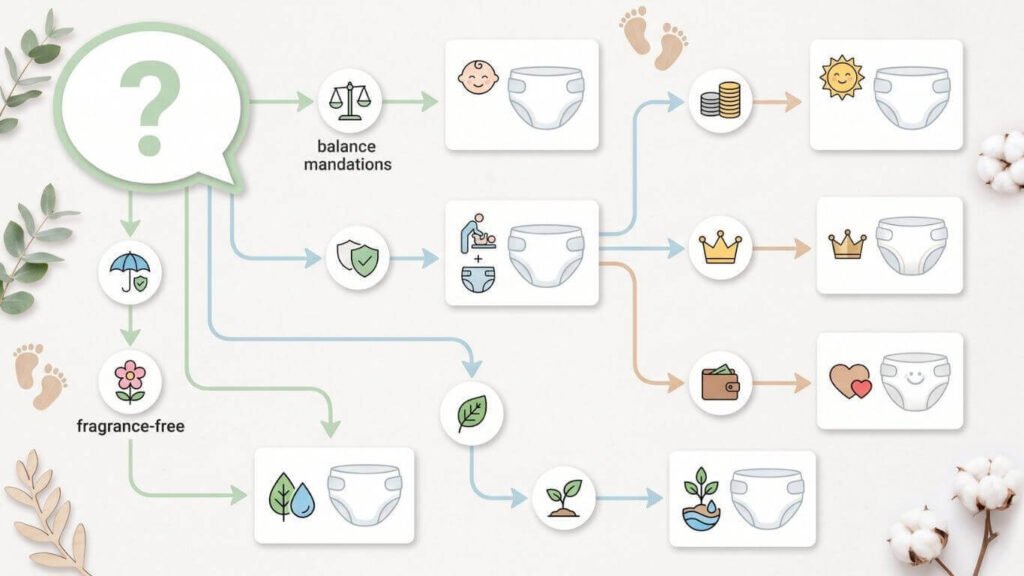
There is no universal winner. The right choice depends largely on your baby’s fit, your priorities, and your budget.
Best Overall Starting Point
Pampers Swaddlers — Our recommended starting point for most newborns because it offers a strong balance of softness, absorbency, fit, and newborn-friendly features.
Best for Frequent Blowouts and Leaks
Huggies Little Snugglers — A particularly good option for babies who frequently experience leaks or back blowouts, thanks to its containment-focused design.
Best Fragrance-Free Mainstream Option
Pampers Pure Protection — A practical mainstream choice for parents who prefer a fragrance-free diaper and want to minimize added fragrance.
Best Budget Value
Kirkland Signature — A strong value option for families with Costco access, provided the available size fits their baby.
Best Premium Option
Coterie — Best suited to parents who prioritize premium softness, absorbency, and detailed material information and are comfortable paying more.
Best Budget Alternative
Luvs Ultra Leakguards — Worth considering when keeping the cost per diaper low is a major priority.
Best Plant-Based-Material Option
Hello Bello — A mid-priced option for parents who prioritize fragrance-free products and plant-derived materials in selected components.
If You Are Still Unsure
Start small. Buy small packs of two different brands rather than committing to a large box. Once you know which diaper fits your baby comfortably and provides reliable leak protection, you can buy larger quantities and potentially reduce your cost per diaper.
How Many Newborn Diapers Should You Buy Before Birth?
Why You Shouldn’t Stock Up on Newborn Sizes
Buying a large supply of newborn diapers before delivery can leave you with unused diapers because:
- Your baby’s birth weight is unknown.
- Newborn and Size 1 weight ranges often overlap, so some babies move into Size 1 quickly. See our [newborn diaper size chart] for a broader guide to diaper sizes, weight ranges, and when babies typically move up a size.
- Babies can grow out of newborn sizes quickly.
- Two babies at the same weight may need different sizes because body shape affects fit.
A Practical Pre-Birth Buying Plan
A simple approach is to:
- Buy one small pack of newborn diapers.
- Keep two or three packs of Size 1 available.
- Keep receipts when possible so unopened packages can be exchanged.
- Wait until after birth to buy larger quantities once you know your baby’s actual size and preferred fit.
This gives you enough diapers for the first few days without unnecessarily stocking up on a size your baby may quickly outgrow.
How Many Diapers Does a Newborn Use?
How Many Diaper Changes Per Day?
Most newborns need about 8–12 diaper changes per day. For a more detailed breakdown by day, week, and month, see our guide to [how many diapers a newborn uses each day].
Estimated 30-Day Diaper Usage
At 8–12 changes per day, that works out to approximately 240–360 diapers over 30 days.
Illustrative 30-Day Diaper Cost
Your cost comparison can be based on the estimated number of diapers used per month and the current price per diaper for each brand.
Important Note About Diaper Cost Estimates
Diaper costs can vary considerably depending on:
- Retailer
- Diaper size
- Package size
- Sales and promotions
- Subscription discounts
- Your baby’s individual diaper use
For this reason, any monthly cost figure should be presented as an illustrative estimate, not a permanent product cost.
Newborn vs. Size 1 Diapers: When Should You Switch?
Newborn Diaper Weight Ranges
Newborn diaper weight ranges vary by manufacturer and product line. Always use the current weight range printed on the package as your starting point rather than assuming that every brand uses the same sizing.
Signs Your Baby Is Ready for Size 1
Your baby may be ready to move up when you notice:
- Weight approaching or exceeding the diaper’s recommended range
- Difficulty fastening the tabs comfortably
- Persistent red marks around the waist or thighs
- Gaps around the legs
- Frequent leaks
- More frequent blowouts
Fit matters more than the number on the package. If a diaper is becoming difficult to fasten or repeatedly leaking despite correct positioning, trying the next size may help—even if your baby is still within the listed weight range.
Important Note About Kirkland Signature
Based on current product research, the Kirkland Signature diaper range starts at Size 1 (8–14 lb) rather than offering a traditional newborn size.
That means Kirkland is better described as a budget option for newborns who fit Size 1, rather than a universal newborn-size choice. Product ranges can change, so check current Costco product information before purchasing.
Frequently Asked Questions About Newborn Diapers
What Is the Best Diaper for a Newborn?
There is no single diaper that is best for every newborn. Pampers Swaddlers are our recommended starting point for most babies because they offer a strong balance of softness, absorbency, fit, and newborn-friendly features.
However, your baby’s body shape and skin sensitivity matter more than brand reputation. If Swaddlers do not fit well, Huggies Little Snugglers are a strong alternative, particularly for babies who experience frequent leaks or back blowouts.
How Many Newborn Diapers Do I Need?
Most newborns use about 8–12 diapers per day, or roughly 240–360 diapers in 30 days.
However, avoid buying hundreds of newborn-size diapers before birth. Babies vary in birth weight and grow quickly, and some may move into Size 1 soon after birth.
A better approach is to start with one small pack of newborn diapers and a few packs of Size 1, then buy more once you know which size and brand fit your baby best.
Are Pampers or Huggies Better for Newborns?
Both are strong mainstream choices, but neither is universally better.
Pampers Swaddlers are our best overall starting point, while Huggies Little Snugglers are our preferred choice for blowout and leak containment.
The best option ultimately depends on your baby’s body shape. If one brand leaves gaps, causes frequent leaks, or feels too tight, try the other.
What Diapers Are Best for Newborns With Sensitive Skin?
For parents who prefer to minimize added fragrance, Pampers Pure Protection is our best fragrance-free mainstream option.
However, fragrance-free does not automatically mean a diaper is medically better for eczema or other skin conditions. Newborn skin can react differently to different materials, so pay attention to how your baby’s skin responds.
If your baby’s skin becomes persistently red, cracked, swollen, painful, or does not improve with basic diaper care, consult your pediatrician.
Do Newborn Diapers Need an Umbilical Cord Notch?
An umbilical cord notch is helpful but not essential.
A notch or low-cut waistband helps keep the diaper away from the healing umbilical cord stump during the first days or weeks. If a diaper does not have a notch, you can generally fold the front of the diaper down to keep it below the stump, following your healthcare provider’s guidance.
When Should I Move From Newborn to Size 1 Diapers?
Move to Size 1 when your baby is approaching or exceeding the manufacturer’s newborn weight range or when the newborn diaper no longer fits comfortably.
Signs that it may be time to size up include:
- Difficult-to-fastening tabs
- Persistent red marks
- Gaps around the legs
- Frequent leaks
- Repeated blowouts
- The diaper sitting too low on your baby’s body
Fit matters more than age alone. Always check the current manufacturer’s weight range, but also consider how the diaper actually fits your baby.
Are Store-Brand Diapers Good Enough for Newborns?
Yes. A store-brand diaper can work just as well as a premium brand if it fits your baby properly and provides reliable absorbency and leak protection.
For example, Kirkland Signature can be a strong budget-value option for babies who fit its available Size 1 range. The cheapest diaper is not necessarily the best choice, but you also do not need to pay a premium price to get a good-fitting diaper.
If you’re considering an alternative to disposable diapers, see our guide to the [best cloth diapers for newborns] and the different cloth diaper types available.
Final Verdict
There is no universal best diaper for every newborn. The right choice depends on your baby’s size, body shape, skin sensitivity, leak patterns, and your family’s budget.
Our recommendations are therefore category-based rather than a strict ranking. Start with the option that best matches your priorities, then let your baby’s actual fit and skin response guide your final choice.
Our Top Picks at a Glance
- Best overall: Pampers Swaddlers
- Best for blowout & leak containment: Huggies Little Snugglers
- Best fragrance-free mainstream option: Pampers Pure Protection
- Best budget value: Kirkland Signature
- Best premium: Coterie
- Best budget alternative: Luvs
- Best plant-based-material option: Hello Bello
The Most Important Advice for New Parents
Don’t buy a year’s supply of one diaper brand before meeting your baby. Start with small packs, test the fit, and buy in bulk only after you know what works.
A diaper that fits your baby securely around the waist and legs, keeps moisture contained, and doesn’t irritate the skin is usually a better choice than simply choosing the most expensive or highest-rated brand.